Huntingdon borough
Huntingdon's old town, 521 buildings between the river and the hill
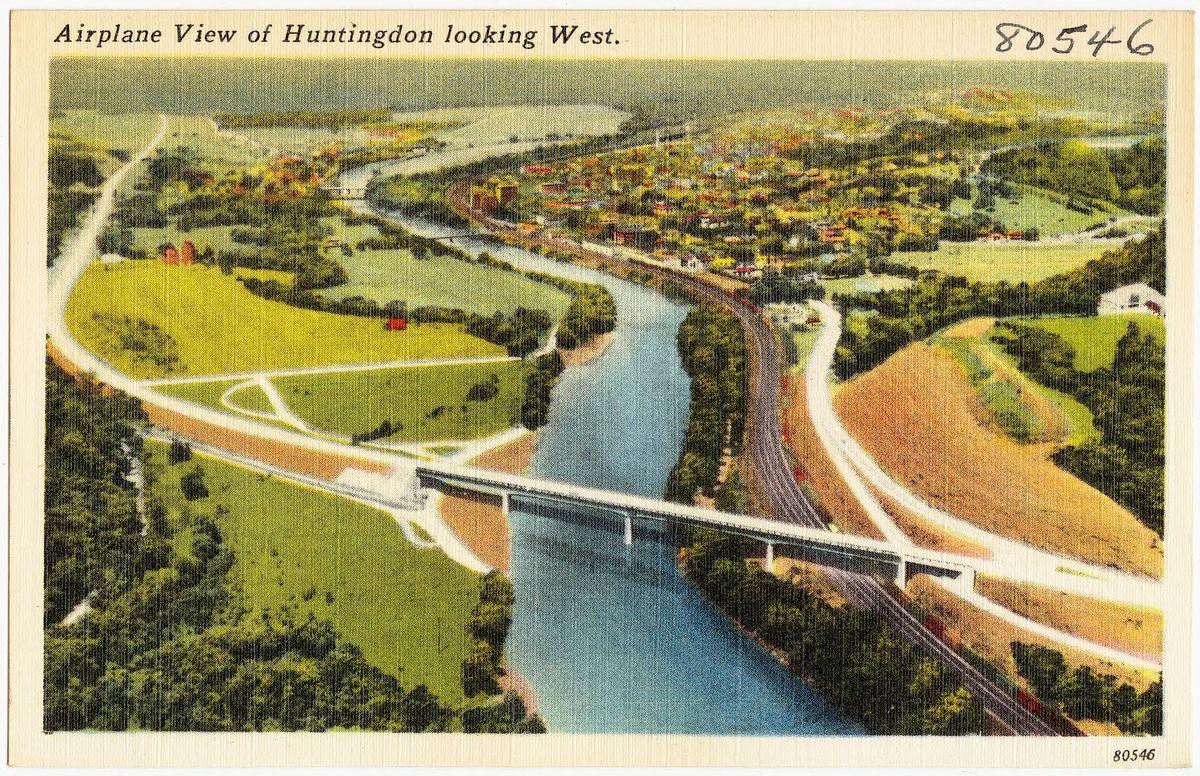
The Huntingdon Borough Historic District takes in 521 buildings at the southern end of the borough, bounded roughly by Allegheny, Ninth, Moore and Second Streets. The buildings date from the late eighteenth century to the first decades of the twentieth, and are typically detached, two and three story, brick and frame structures. The nomination was prepared in July 1985 by George J. Drobnock, Rory Peachey and Nancy S. Shedd of Huntingdon Revitalization & Dev., Inc. The district had already been recorded in the Huntingdon County Historic Sites Survey of 1980.
The town began as a proprietary town in 1766, when William Smith, first head of the College of Philadelphia, acquired the site. He laid out lots in 1767 and set aside a market space on Smith Street, the broad center street near the river. In 1787 the town was made the seat of the new county. In the early 1790s, after a small jail on Lot 41 burned, Smith and the trustees of the public buildings agreed on a plan: a courthouse in the middle of Smith Street, facing a jail later built on the north side of Mifflin Street. A market square, the Diamond, was then established in 1792 along Penn Street two blocks west. Africa's 1883 county history records that Smith Street, now Third, was originally ninety feet wide, and that the old courthouse was demolished in May 1848, when the street was reopened to its full width. The nomination says the spot is marked by a garden plot and a monument erected in 1896.
Growth came with the transportation routes. The Huntingdon, Cambria and Indiana Turnpike was completed in 1820, the Pennsylvania Canal reached town in 1832, and the main line of the Pennsylvania Railroad arrived in 1850. Eight to ten hostelries were built for travelers; the nomination names the Penn Hunt Hotel, the former Leister House of 1873 to 1874, as the one still standing. More than fifty businesses were established between 1850 and 1900. Almost three quarters of the district's buildings went up between 1825 and 1900, and brick accounts for sixty percent of the buildings in the district.
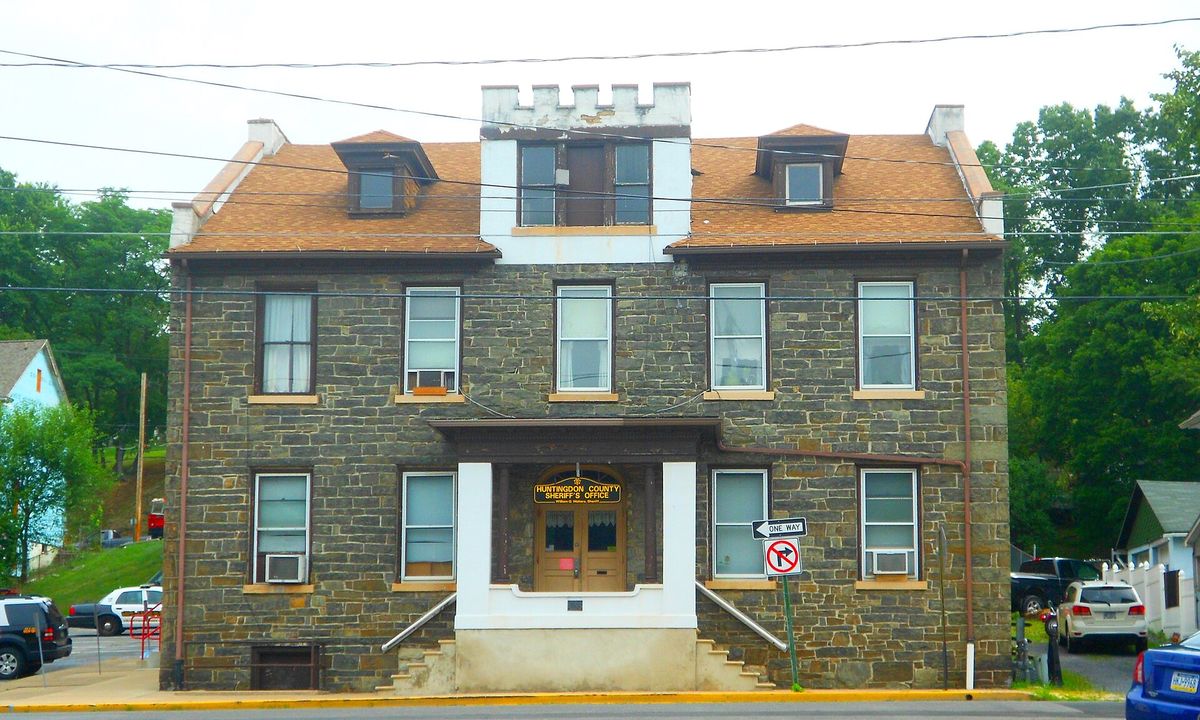
The district was listed for architecture and commerce, with a period of significance of 1788 to 1935. The nomination calls it the largest commercial center in the county. Two blocks north on Third Street, the county jail of 1829 was still in use as part of the county's jail in 1985.
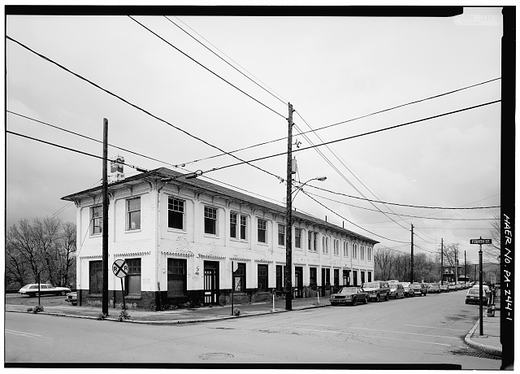
Between 1865 and 1875 businessmen constructed no less than eighteen tall (principally three story) commercial buildings which fronted directly on the street, often with projecting cornices and window moldings which accentuated their different character. Every one of these buildings survives todayNational Register of Historic Places nomination, Huntingdon Borough Historic District (reference 86000852), 86000852, section 8 continuation, p6 · character 15,202 of the scanned text
Sources
- National Register of Historic Places nomination: Huntingdon Borough Historic District, reference 86000852 (1985)
- J. Simpson Africa, History of Huntingdon and Blair Counties, Pennsylvania (Huntingdon Borough, Court-Houses, pp. 49-50) (1883)
Checked 2026-09-05 · National Register of Historic Places nomination, read in full
← All stories from Huntingdon borough
Have something to add to this story, or a photograph of it? Send it here →
Photographs from Huntingdon borough
More from Huntingdon borough
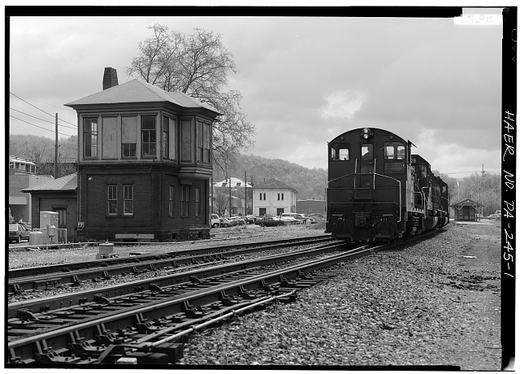
HUNT Tower stands just north of the tracks at the west end of the old station platforms in Huntingdon, where Fourth and…
Huntingdon borough, Huntingdon's Grand Courthouse Towers over TownDid you know? Huntingdon tore down a courthouse people loved, and fifty five years later they were still sore about…
Huntingdon borough, Native American Civil RightsDid you know? The man who helped bring the first national Native American rights organization into being spent the last…
Also about architecture
On the north side of Main Street in Alexandria, five lots north of Hartslog Street, stands a two-story brick store with…
elsewhere in the county, The Rock: the Leas house on the Fort Shirley groundTo the right as you enter Shirleysburg from the north on Route 522 stands a two and a half story house of locally fired…