Jackson township
Greenwood Furnace
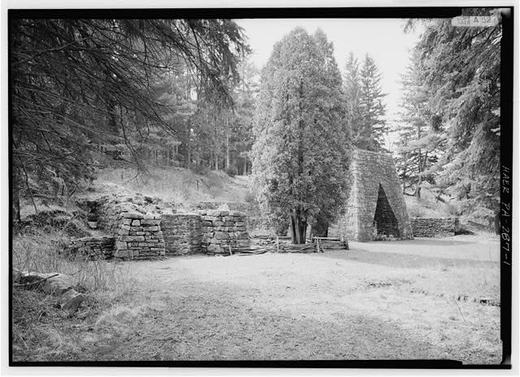
Five miles east of McAlevys Fort on Route 305, in the northeastern part of the county, the stacks of Greenwood Furnace, one rebuilt and one a ruin, stand inside a state park named for it. The nomination calls the place an iron plantation: a furnace with the mansion, church, worker housing, tavern, mill, tramway and mines that kept it running.
The nomination says Greenwood was established in 1834 by Norris, Rawle and Co., who had recently acquired the Freedom Iron Works near Lewistown and wanted pig iron to refine at Freedom Forge, and that large tracts of virgin timber for charcoal apparently dictated the remote site. J. Simpson Africa's 1883 county history names the proprietors as Judge Rawle and James Hall, and says Hall became the resident partner, built the furnace mansion and lived in it about a dozen years.
The stone stack was first assessed in 1835 at $10,000. By 1850 the works employed 73 men and 34 horses and mules and made 1,600 tons of pig iron a year. Ownership passed in 1849 to John A. Wright and Co., and later to a reorganized Freedom Iron Co. A second stack was added, and an 1870 report counted 230 men and 3,096 tons of iron, which the nomination says made it the county's largest iron operation. Africa in 1883 found about ninety tenements, nearly two hundred men employed, and a stone Methodist church built in 1865. Freedom Iron became Logan Iron and Steel Co. and kept Greenwood in blast until December 1904; the nomination calls it the last charcoal furnace in Huntingdon County to go out of blast.
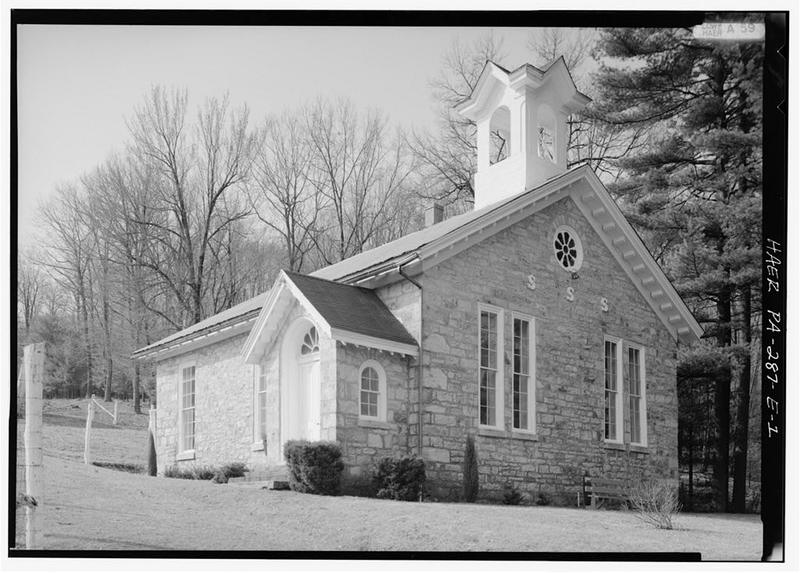
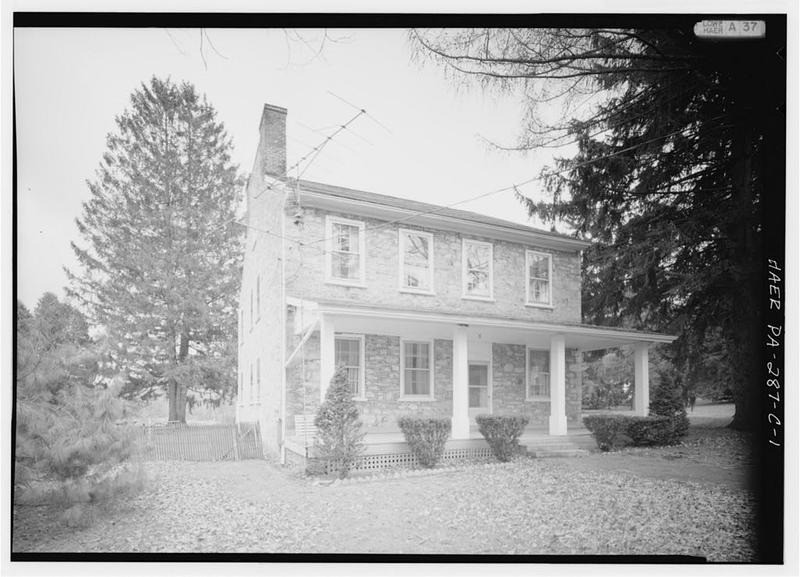
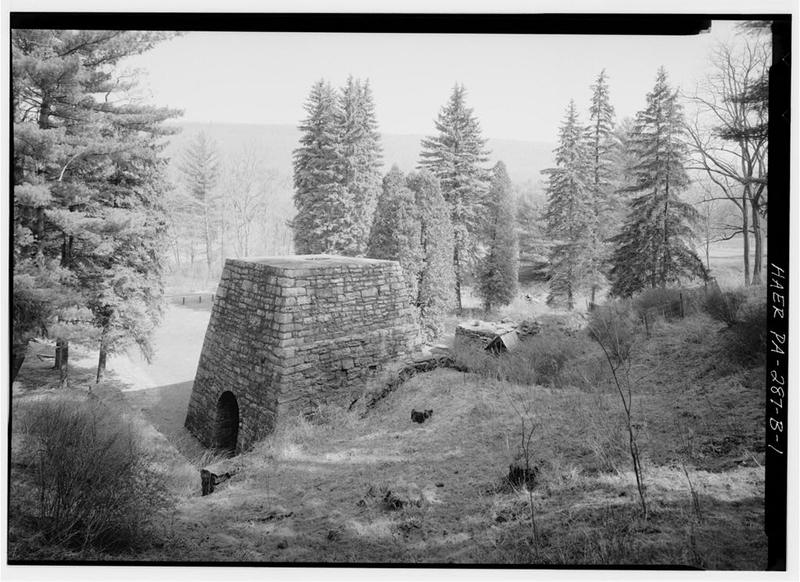
The Commonwealth acquired the land for reforestation soon after, opened a state tree nursery in 1905 and a state park in 1930. The Civilian Conservation Corps rebuilt Stack No. 2 in 1936, mortaring the stones for stability and leaving its four arches open to walk through. The ironmaster's mansion, the 1865 church and a log meat house with the hooks still in its ceiling survive, along with the foundations of three rows of worker houses called Colliers, Creek and Griffith Row. The district was listed under Criteria A and D, for the industry and for what digging may still reveal. West of the mill site the tramway right-of-way can be followed about two and a half miles, with mines and spoil piles visible on either side along its last three quarters of a mile.
Originally, iron ore and some of the limestone needed was hauled to the furnace from the Mifflin County side of Stone Mountain, and the iron hauled some thirteen miles back over the mountain to the forge. Later, discovery of ore deposits closer to the furnace eliminated some of this difficult labor.National Register of Historic Places nomination, Greenwood Furnace (reference 89001819), section 8, p. 8 · character 13,268 of the scanned text
Sources
Checked 2026-09-05 · National Register of Historic Places nomination, read in full
← All stories from Jackson township
Have something to add to this story, or a photograph of it? Send it here →
Photographs from Jackson township
More from Jackson township
The church at Greenwood Furnace is a one-story building of rubble stone, gable end to the road, with a side entrance…
Jackson township, The ironmaster's mansion at Greenwood FurnaceFive miles east of McAlevys Fort on Route 305, the ironmaster's mansion at Greenwood Furnace is a four-bay, two-story…
Jackson township, Greenwood Furnace, Stack No. 2Five miles east of McAlevys Fort on Route 305, the second of Greenwood Furnace's two stacks stands with its four arches…
Also about industry
The Rockhill Iron and Coal Company store stands at the corner of Main and Cliff streets in Robertsdale, opposite the…
elsewhere in the county, The company office that became the post officeThe Rockhill Iron and Coal Company office stands on the east side of Main Street in Robertsdale, just south of the East…