Huntingdon County Information Page

Township · Huntingdon County

Wood

13 stories on file, each with its sources. 16.4 square miles of land in the ridge and valley country of central Pennsylvania.

612
Population
2020 Census, P.L. 94-171
16.45 sq mi
Land area
2020 Census gazetteer
Township
Type
GEOID 4206186080

Nearby

Straight-line miles between map centers, 2020 Census boundary file

The founding record

Wood township, the youngest in the county, was taken from Carbon. The result at that election was tie vote and on January 5, 1905, the court ordered another election for February 21st following, when a majority of the electors expressed themselves in favor of a new township. On March 6, 1905, the court ordered the division of Carbon township, from the eastern half of which should be erected the township of Wood, the line running a short distance east of Broad Top City. In Huntingdon county there are eighteen boroughs, viz. : Alexandria, Birmingham, Broad Top City, Cassville, Coalmont, Dudley, Huntingdon, Mapleton, Marklesburg, Mill Creek, Mount Union, Orbisonia, Petersburg, Rock Hill, Saltillo, Shade Gap, Shirleysburg and Three Springs. Of these boroughs Huntingdon is the oldest and, being the county seat, stands first in importance. The first white claimant to the land where Huntingdon now stands was Hugh Crawford, who was an ensign in Captain Hamilton's company at the time of the French and Indian war. He claimed to have made an improvement here about I753i but just how he acquired title to the land is not clear. John W. Jordan, ed., History of the Juniata Valley and Its People (New York: Lewis Historical Publishing, 1913) · character 209,703 of the scanned text

Quoted from a work published before 1929 and therefore in the public domain in the United States. Spelling and punctuation are as printed, including nineteenth century spellings of place names. Scanned text carries optical character recognition errors; the character offset is given so the passage can be found and checked in the original.

13 stories

Stories from Wood

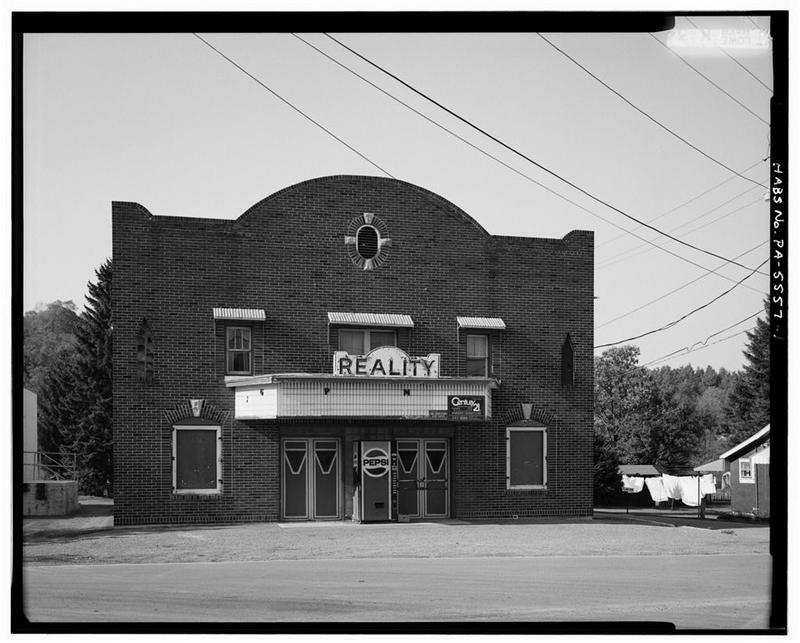
Reality Theater, South Main Street opposite Route 913, Robertsdale
Reality Theater, South Main Street opposite Route 913, RobertsdaleLibrary of Congress, Historic American Buildings Survey / Historic American Engineering Record. No known copyright restrictions. pa2068

Robertsdale's first theater belonged to the coal company. In 1918 the Rockhill Iron and Coal Company built the Liberty Theater at the corner of Main Street and Route 913, a wood-frame building the Historic American Buildings Survey measures at roughly 40 by 110 feet, with seating for 425. A local newspaper quoted in the survey remembered it as popular across the Broad Top region, showing the latest talking pictures nightly. The National Register nomination for the Robertsdale Historic District adds that the entertainment was not pure generosity; the theater was meant to keep a labor force that tended to drift. On December 11, 1936, the Liberty burned, in a fire the survey records as of undetermined origin.

The company chose not to rebuild. In 1948 it sold the lot to Gene Yanni, a former miner who had been paralyzed in a mining accident nineteen years earlier. Yanni and his brother-in-law, Thomas Cupillari, paid for a new theater that same year. It went up in concrete block with a brick-faced street front: an arched parapet with a bull's-eye window, keystones in the window surrounds, glass block details, and a wood marquee with lights. The nomination files the style as Mission. Yanni explained the name: people had thought another theater in Robertsdale only a dream, and in 1948 the dream became a reality.

It opened on December 23, 1948, and ran until August 11, 1958. It reopened in 1968 and ran again until the early 1980s.

Project historian Lola Bennett, writing in 1989, called it one of the village's architectural highlights and noted it was for sale. The 1991 county inventory of industrial sites lists it, with the stone high school beside it, as one of two later buildings important to the community. The district nomination, though the theater was then under fifty years old, counted its architectural singularity enough to make it a contributing resource, and recorded that the East Broad Top Coal Miner's Historical Society planned to renovate it as a miners' museum, theater and meeting hall.

The theater opened on December 23, 1948, and operated until August 11, 1958. The theater reopened in 1968, and operated again until the early 1980s. The building, which remains one of the village's architectural highlights, is currently for sale.Library of Congress, Historic American Buildings Survey / Historic American Engineering Record, Reality Theater, written data pages, HABS PA-5557 data pages, p. 2 · character 2,186 of the scanned text
Checked against the record. Checked against the survey's written record before publication; 3 claims it did not support were removed or corrected.

Open this story on its own page →

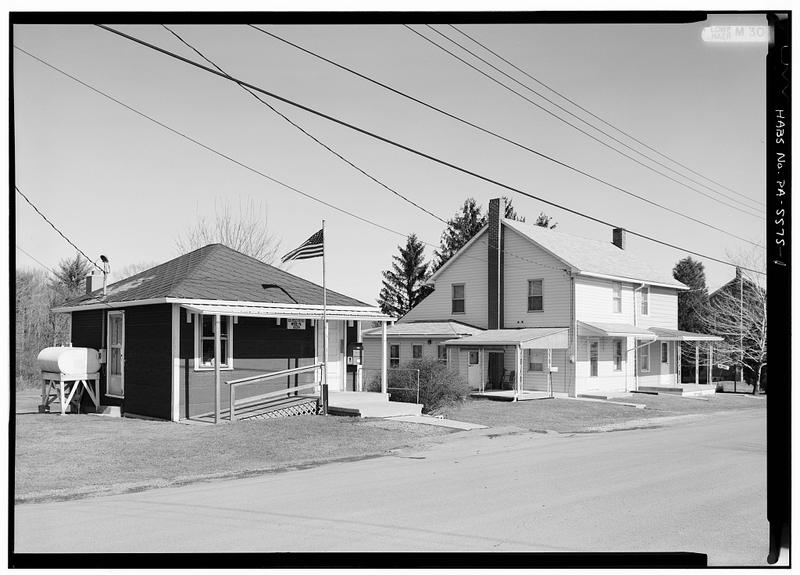
Rockhill Iron & Coal Company Office, Main Street, Robertsdale
Rockhill Iron & Coal Company Office, Main Street, RobertsdaleLibrary of Congress, Historic American Buildings Survey / Historic American Engineering Record. No known copyright restrictions. pa2066

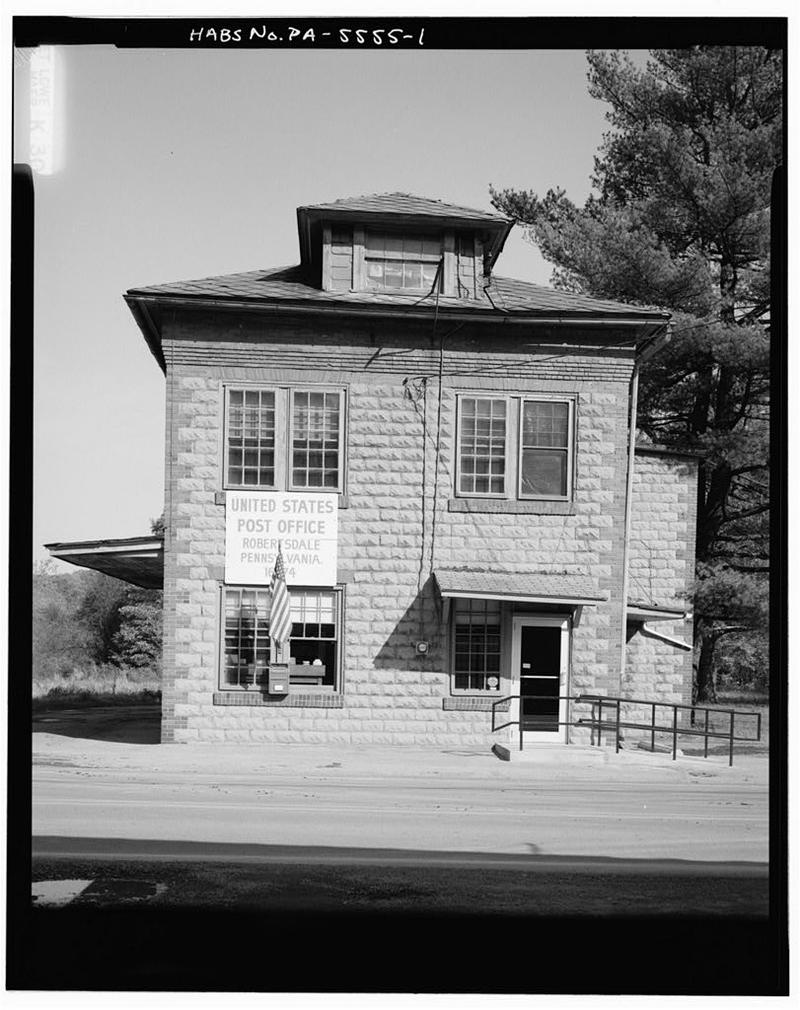
The Rockhill Iron and Coal Company office stands on the east side of Main Street in Robertsdale, just south of the East Broad Top tracks and across them from the stone company store. The Historic American Buildings Survey report on it, whose history and description runs to a single paragraph written by project historian Lola Bennett in 1989, dates the building to around 1917. The National Register nomination for the Robertsdale Historic District puts it at about 1914, and the 1991 county inventory of industrial sites groups it with the hotel, new depot and post office the company built before the First World War as the mines around Robertsdale expanded.

The survey calls it imposing: two and a half stories of concrete block, with detailing it reads as a statement of the building's importance. There are large paired double-hung sash windows on the facade, transoms over the entrances, brick corbeling at the cornice, and brick quoins, lintels, sills and door surrounds. The district nomination gives the footprint as 25 by 60 feet with a 10 by 24 foot ell on the south side, under a hipped roof with hipped dormers at the east and west ends.

Tax records, the survey says, first valued the office at $2,000, more than any other single structure Rockhill owned except the company store.

Since 1965, the survey says, the building has housed the Robertsdale post office. Before that the post office had a building of its own across Main Street, a two-story concrete block structure the survey's overview report dates to about 1915 from tax records; the inventory says it ran there until the 1960s, with the postmaster's family living upstairs, and was leased to commercial tenants after the office moved across the street. The overview adds that the Robertsdale post office was established in 1875, and in its early years the mail came in by rail and was sorted at the company store.

The district nomination, whose photograph of the office was taken in October 1988, found it well maintained and keeping a high degree of integrity, while the older post office building across the street stood vacant.

In tax records, this building was originally valued at $2,000, more than any other single structure Rockhill owned, after the company store. Since 1965, this building has housed the Robertsdale post office.Library of Congress, Historic American Buildings Survey / Historic American Engineering Record, Rockhill Iron & Coal Company Office, written data pages, HABS PA-5555 data pages, p. 2 · character 1,358 of the scanned text
Checked against the record. Checked against the survey's written record before publication; 1 claim it did not support was removed or corrected.

Open this story on its own page →

Rockhill Iron & Coal Company Store, 68 North Main Street, Robertsdale
Rockhill Iron & Coal Company Store, 68 North Main Street, RobertsdaleLibrary of Congress, Historic American Buildings Survey / Historic American Engineering Record. No known copyright restrictions. pa2065

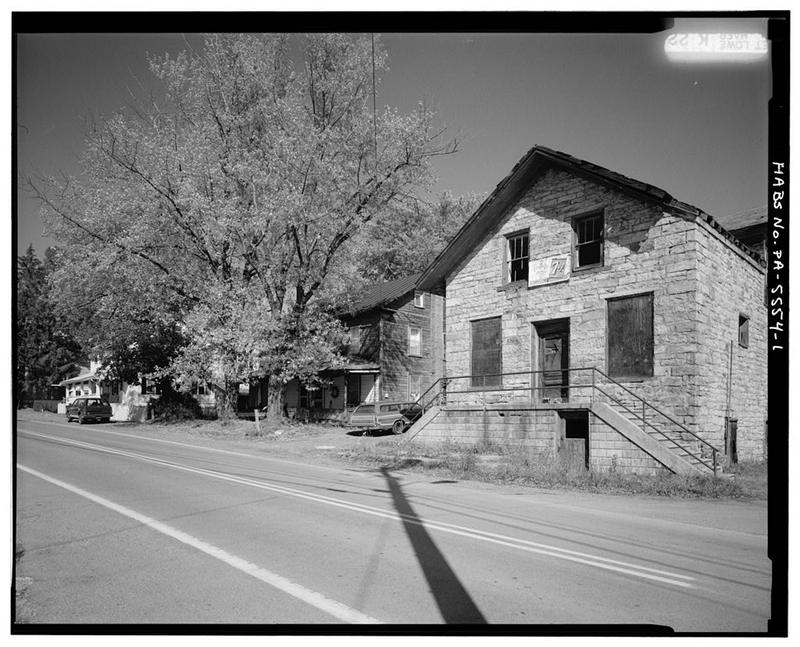
The Rockhill Iron and Coal Company store stands at the corner of Main and Cliff streets in Robertsdale, opposite the tracks, at the center of the company town the company laid out near its No. 1 mine. The Historic American Buildings Survey report on it, written by project historian Lola Bennett in 1989, dates the store to 1874 and 1875 and calls it one of the first structures put up in Robertsdale and the only one built entirely of stone. The National Register nomination for the Robertsdale Historic District puts the date a year earlier, at 1873 to 1874, and describes the walls as local buff colored stone. It is two stories, gable end to the street, with an office ell on the north side.

The survey says the company never actually ran the store. Citing 1911 Immigration Commission reports, it explains that Pennsylvania law barred coal companies from operating their own stores, so Rockhill leased the building to a merchant who paid it a share of his profits. The arrangement apparently benefited the company, the survey says: the contract made the merchant sell on credit and pay the company whether or not his customers ever paid him.

One of the first merchants was Dr. Lewis Royer, a longtime Broad Top resident who had put the old Rockhill Furnace near Orbisonia back in blast with Percival P. Dewees in 1868. J. Simpson Africa's 1883 county history, in its sketch of Dewees, notes that Dr. Royer then owned the store at the mines. Tax records from the 1880s and 1890s, the survey says, list Royer as a clerk and later as storekeeper, and from 1883 to 1898 he owned a relatively expensive house in town.

The 1991 county inventory of industrial sites records that by 1883 Robertsdale had seventy double houses and a population of 700, with the stone store at the center of town. The district nomination adds that the store supplied dry goods and food to the miners' families, and that by the time the nomination was written the building had stood vacant for years, its roof and windows in poor condition.

Although always known as the "company store," it was never really operated by the Rockhill Iron and Coal Company. According to 1911 Immigration Commission reports, Pennsylvania law prohibited coal companies from operating their own stores. The company would thus lease the store to a merchant who paid the company a percentage of the profits.Library of Congress, Historic American Buildings Survey / Historic American Engineering Record, Rockhill Iron & Coal Company Store, written data pages, HABS PA-5554 data pages, p. 2 · character 1,278 of the scanned text
Checked against the record. Checked against the survey's written record before publication; 3 claims it did not support were removed or corrected.

Open this story on its own page →

Superintendent's House, 9 Church Street, Robertsdale
Superintendent's House, 9 Church Street, RobertsdaleLibrary of Congress, Historic American Buildings Survey / Historic American Engineering Record. No known copyright restrictions. pa2061

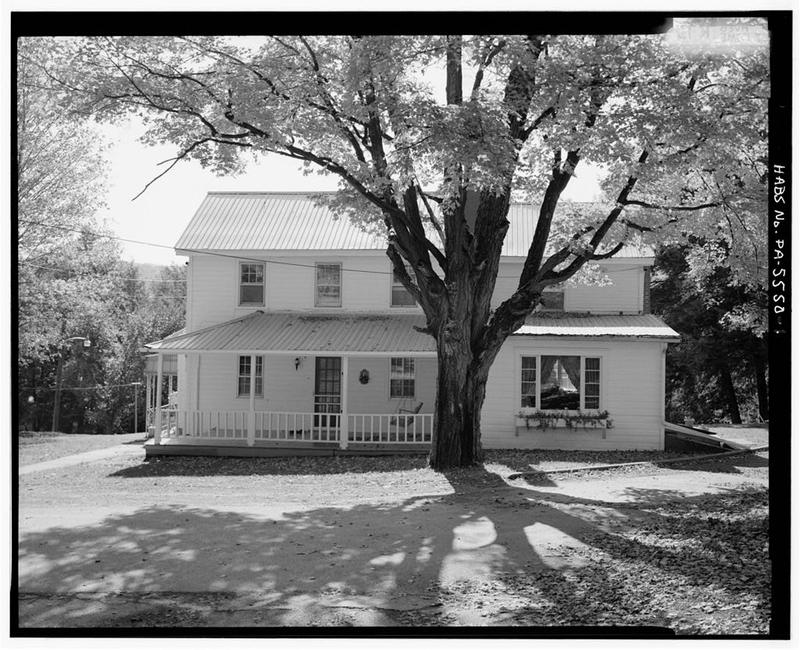
The Historic American Buildings Survey's file on the superintendent's house at 9 Church Street in Robertsdale holds photographs behind a single cover sheet, with no written history of its own. What the record says about the house comes from the National Register nomination for the Robertsdale Historic District and from the survey's overview report on the Rockhill Iron and Coal Company towns.

The nomination lists 9 Church Street as a single house built about 1896 for mine supervisors, and names it as one of three exceptions to the usual miners' housing, along with the one-story cottages on Spring Street and the Methodist parsonage on Lincoln Street. It sits just below the Methodist church at the end of Church Street and near the portal of Rockhill mine No. 1. It is a balloon-frame, two-story, side-gabled house of the same size and massing as the semi-detached miners' houses, with one added detail: a porch with turned posts, which the nomination found on two other houses in town, the postmaster's and the engineer's. The survey's overview report names the paymaster's house as another with turned porch posts.

The overview report says that by 1921 the community had five working collieries, two superintendents' houses, a doctor's house, a paymaster's house, a train depot, an engine house, four churches, and more than 200 double and fifty single miners' dwellings. The church up the hill from the superintendent's house stands on land the nomination says the company gave to the Methodists in 1890, and the company kept the right to mine the coal beneath it.

Checked against the record. Checked against the survey's written record before publication; 6 claims it did not support were removed or corrected.

Open this story on its own page →

St. Michael's Greek Orthodox Church, High Street, Woodvale
St. Michael's Greek Orthodox Church, High Street, WoodvaleLibrary of Congress, Historic American Buildings Survey / Historic American Engineering Record. No known copyright restrictions. pa2085

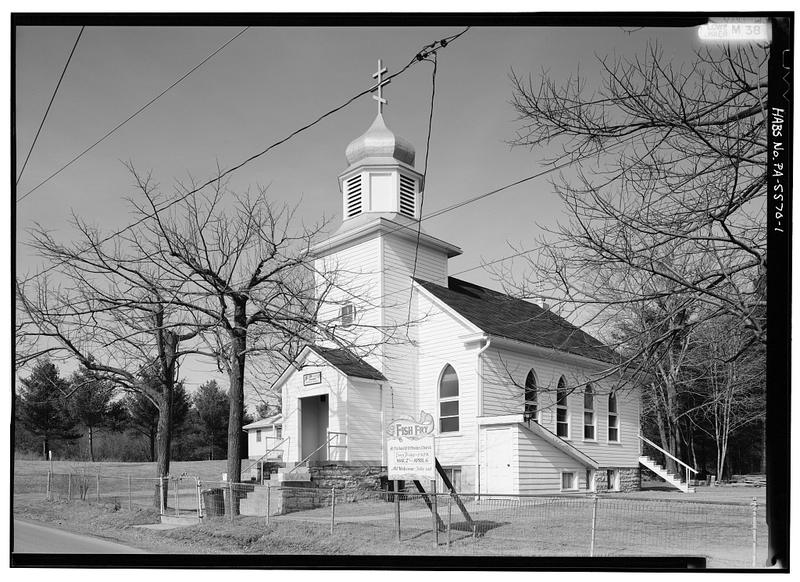
St. Michael's Greek Orthodox Church stands on a small parcel of High Street land that its founders obtained from the coal company. The Historic American Buildings Survey, which recorded the church in 1989, says the parish was organized in 1917 by immigrants from the Galician and Carpathian Mountain region of eastern Europe, and that they built a wood-frame church with a center steeple, an onion dome and a Greek Orthodox cross atop its spire. Members of the congregation told the survey the church was originally elaborately decorated with murals.

That first church burned in the 1930s. The congregation rebuilt it immediately, and the survey says photographs of the old exterior indicate the builders worked to reproduce many of the original architectural elements. The survey names one feature that differed, at the back: the new church has a curved rear wall where its predecessor's was straight. The 1992 National Register nomination for the Woodvale Historic District describes the same rebuilding and lists a second difference, a small one-story entrance vestibule.

The congregation also built a hall across the street, where it held meetings, dances and other social events, and laid out a large cemetery northwest of town. The survey found the church, the hall and the cemetery all still in use in 1989 and called them integral parts of the community. The church at first rented half of a double house as a parsonage; by 1989 it was building a new parsonage beside the church.

The county's 1991 inventory of historic engineering and industrial sites counts St. Michael's as one of three onion-domed churches in Huntingdon County, with the other two in Mount Union and Huntingdon.

In 1917, immigrants from the Galacian and Carpathian Mountain region of eastern Europe organized a Greek Orthodox parish in Woodvale, obtaining a small parcel of land on High Street from the coal company, on which to build a church.Library of Congress, Historic American Buildings Survey / Historic American Engineering Record, St. Michael's Greek Orthodox Church, written data pages, HABS PA-5570 data pages, page 2 · character 892 of the scanned text
Checked against the record. Checked against the survey's written record before publication; 4 claims it did not support were removed or corrected.

Open this story on its own page →

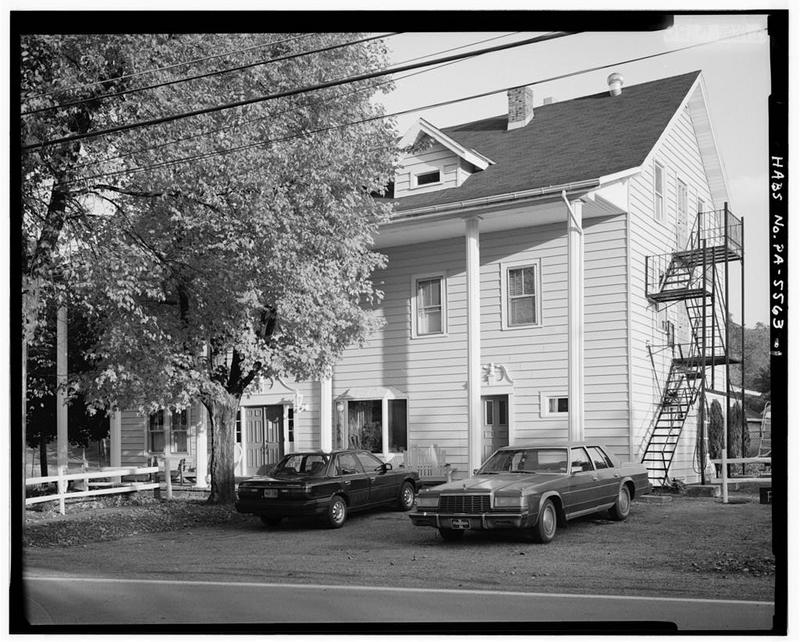
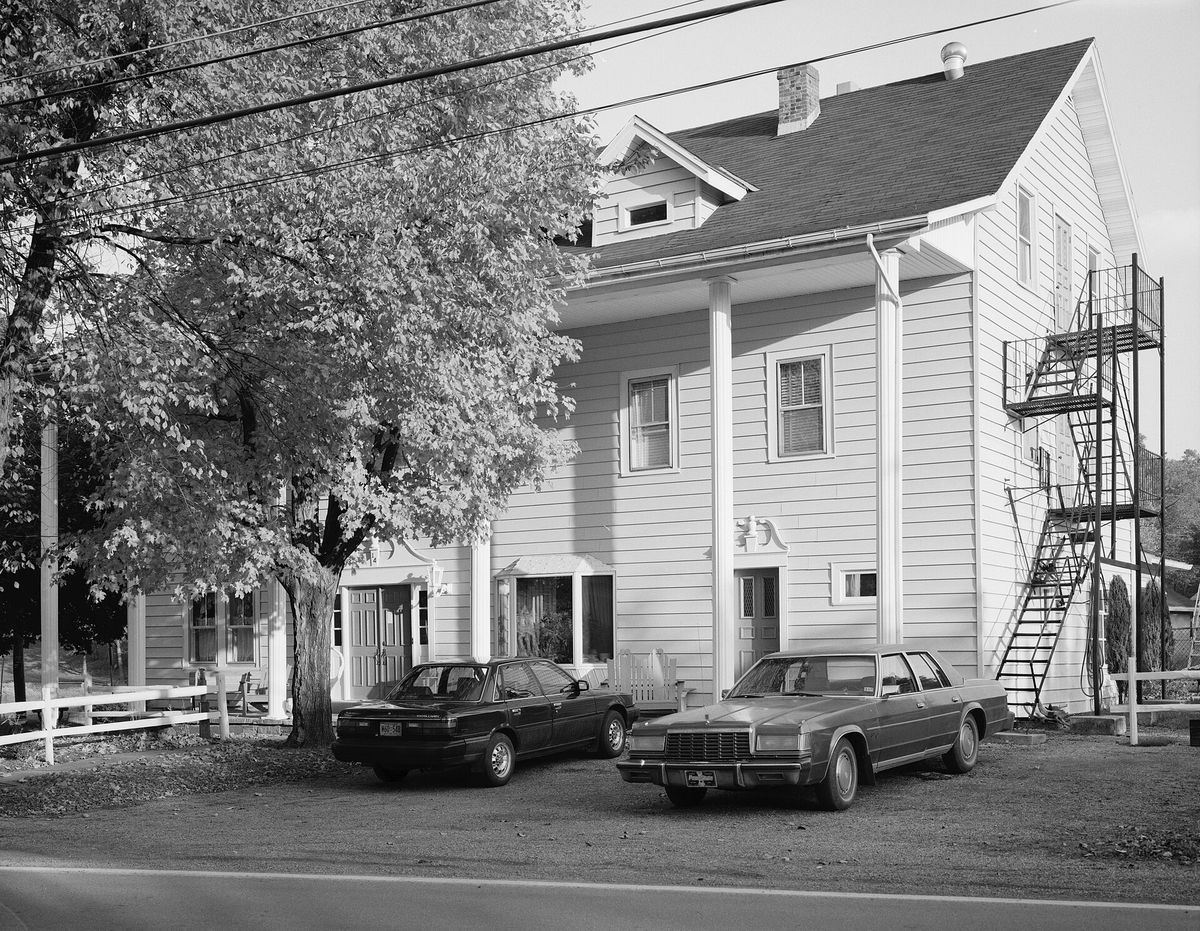
Robertsdale Hotel, 14 South Main Street, Robertsdale
Robertsdale Hotel, 14 South Main Street, RobertsdaleLibrary of Congress, Historic American Buildings Survey / Historic American Engineering Record. No known copyright restrictions. pa2074

In 1911 and 1912 the Rockhill Iron and Coal Company built a hotel of thirty-two rooms in the center of Robertsdale, at 14 South Main Street, just south of its office building. The Historic American Buildings Survey report on it, three short paragraphs from a 1989 project whose research and writing were done by project historian Lola Bennett under senior historian Alison K. Hoagland, says the hotel was for company officials visiting the town, and that for that reason it got more attention to architectural detail than the miners' dwellings. Early photographs show a two-and-a-half-story clapboard building under a gable roof, with three wall dormers and a large veranda across the front. The National Register nomination for the Robertsdale Historic District cites an early photograph of its own for the same dormers and veranda and ties the hotel to the increased production in the area around 1912; the 1991 county inventory of industrial sites groups it with the depot, office and post office the company put up before the First World War.\n\nA number of people ran the hotel over the years, the survey says, and the company kept control of the operation. In 1948 it sold the building to Ernest Ross, the proprietor at the time. Ross ran it until 1975, then sold it to Jon M. Donaldson, who owned it when the survey was made.\n\nBy then the building had been renovated inside and out. Vinyl siding covered the clapboard, and the original veranda had given way to a double-height porch in what the survey calls a southern mansion style. The underlying structure, including some of the original window openings, remained. The survey calls the hotel the oldest non-residential building the Rockhill company erected that still serves its original purpose, and the district nomination agrees that it still functions as a hotel and keeps its overall massing, setting and some of its original window configuration.\n\nThe nomination's inventory row for 14 South Main Street lists it simply as a wood hotel with a side gable roof, built about 1912. Its photograph of the building, taken in November 1988, is labeled a view east of the Robertsdale hotel.

In 1911-12, the Rockhill company constructed a thirty-two-room, wood-frame hotel in the center of Robertsdale. The hotel served company officials when they visited the town, and as such, it received greater attention to architectural details than the miners' dwellings.Library of Congress, Historic American Buildings Survey / Historic American Engineering Record, Robertsdale Hotel, written data pages, HABS PA-5563 data pages, p. 2 · character 912 of the scanned text
Checked against the record. Checked against the survey's written record before publication; 5 claims it did not support were removed or corrected.

Open this story on its own page →

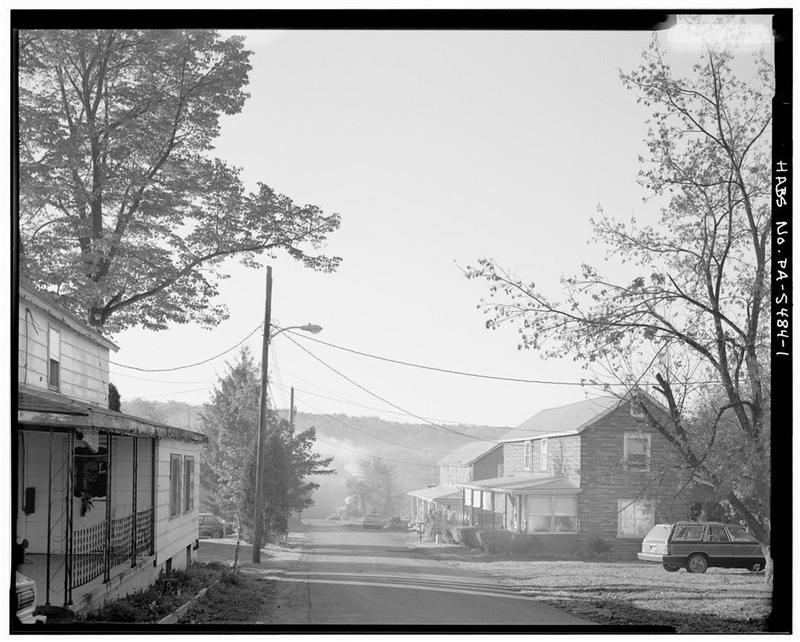
Town of Robertsdale, Robertsdale
Town of Robertsdale, RobertsdaleLibrary of Congress, Historic American Buildings Survey / Historic American Engineering Record. No known copyright restrictions. pa1983

Robertsdale sits on the east side of Broad Top Mountain in the southwest corner of Huntingdon County, and the National Register nomination written in 1992 describes a Pennsylvania coal patch town that still looks the part. The Rockhill Iron and Coal Company laid the town out in 1873. The nomination names its founders as Philadelphia businessmen, among them Edward and Algernon Roberts, Richard D. Wood and Ario Pardee, in partnership with Percival Dewees, who owned an iron furnace at Rockhill, and says the town took its name from two of them. Before the company arrived, a settler from Maryland named William Houck had a coal mine on the site, which the nomination says became the company's first.

Between 1873 and 1875 the company put up houses for 100 miners and their families, along with a store, stable, blacksmith's shop and engine shop. By 1876 it ran three mines at Robertsdale and the village had 479 people. J. Simpson Africa's county history of 1883 counted 250 hands in the mines, twelve thousand tons of coal a month, and seventy company houses holding a population of seven hundred, a majority of the miners Welsh. The nomination calls the company the most productive of all the Broad Top operations between 1873 and the 1920s, and says it eventually worked nine mines around Robertsdale and Woodvale.

The company store, built of buff local stone in 1873 and 1874, stands at the corner of Main Street and the East Broad Top tracks. The nomination says it was the community's sole source of supplies, and that owning all the land let the company keep any other business out of town. Jesse O. McClain managed the store in the early 1900s until a dispute led him to open his own on Lincoln Street. The company fenced it off; McClain sued and won, and the fences came down. In 1925 the company asked him to lease its store again, and the lease stayed in the McClain family until 1958.

Demand for coal fell after World War I, strikes hit in 1922 and 1927, and the company was bankrupt by 1928. New management kept it going until 1956, when the holdings went to the Kovalchick Salvage Company and the mines closed. Of the 113 buildings in the district, 103 contribute to it, and 95 company houses stand. The company began selling those houses to its employees in 1948.

Robertsdale, named after two of the company founders, was typical of most company towns; the company owned most of the land and buildings. The company buildings form the center of town with an office building, depot, post office, and store. The company threw up plank housing cheaply and quickly with few amenities such as indoor plumbing.National Register of Historic Places nomination, Robertsdale Historic District (reference 92000391), section 8 page 3 (PDF page 22) · character 34,891 of the scanned text
Checked against the record. Checked against the National Register nomination text before publication; 6 claims the nomination did not support were removed or corrected.

Open this story on its own page →

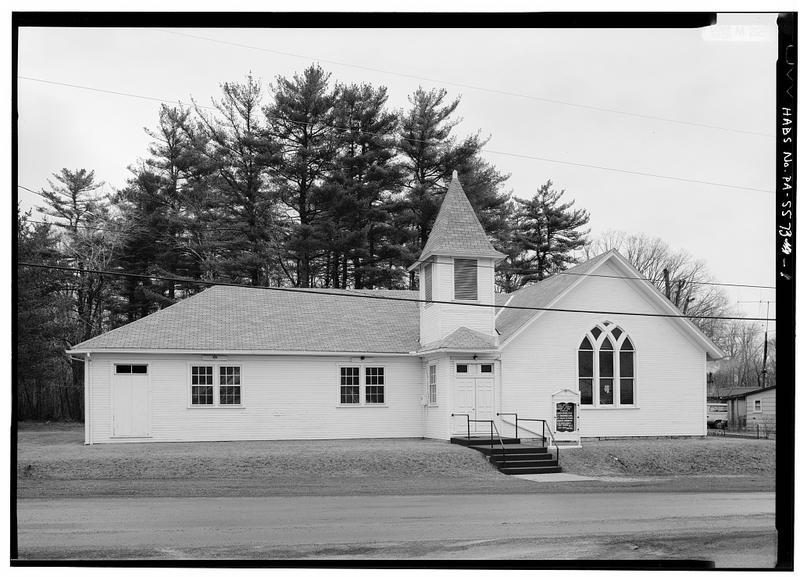
Woodvale Methodist Church, Huntingdon Square, Woodvale
Woodvale Methodist Church, Huntingdon Square, WoodvaleLibrary of Congress, Historic American Buildings Survey / Historic American Engineering Record. No known copyright restrictions. pa2088

The Woodvale Methodist Church is a wood-frame building with its steeple set to one side, placed by the Historic American Buildings Survey at Huntingdon Square. The survey recorded it in 1989 and drew its short history from church records: the Methodist Episcopal parish at Woodvale was established in the early 1900s on land leased by the coal company, and the original building was erected in 1911 by John Deforest, a local carpenter, working with members of the congregation. In the mid 1920s a large addition was made to the original block.

The 1992 National Register nomination for the Woodvale Historic District puts the church on the north side of High Street and describes the result as an L-shaped church with the entrance tower at the juncture of the two arms. The original 1911 church was the front-facing gable section with its side tower; the long addition came in the 1920s. The nomination counts it as one of Woodvale's two churches, the other being St. Michael's Greek Orthodox, and lists it as a contributing building of the district.

The survey found the church still standing in its original condition in 1989. By then, the survey says, the Methodist churches at Woodvale and Robertsdale shared a rotating service schedule with the neighboring Broad Top and Cooks congregations, four churches on one rotation.

The original wood-frame, side-steeple building was erected in 1911 by John Deforest, a local carpenter, and members of the congregation. In the mid 1920s, a large addition was made to the original block.Library of Congress, Historic American Buildings Survey / Historic American Engineering Record, Woodvale Methodist Church, written data pages, HABS PA-5573 data pages, page 2 · character 1,038 of the scanned text
Checked against the record. Checked against the survey's written record before publication; 6 claims it did not support were removed or corrected.

Open this story on its own page →

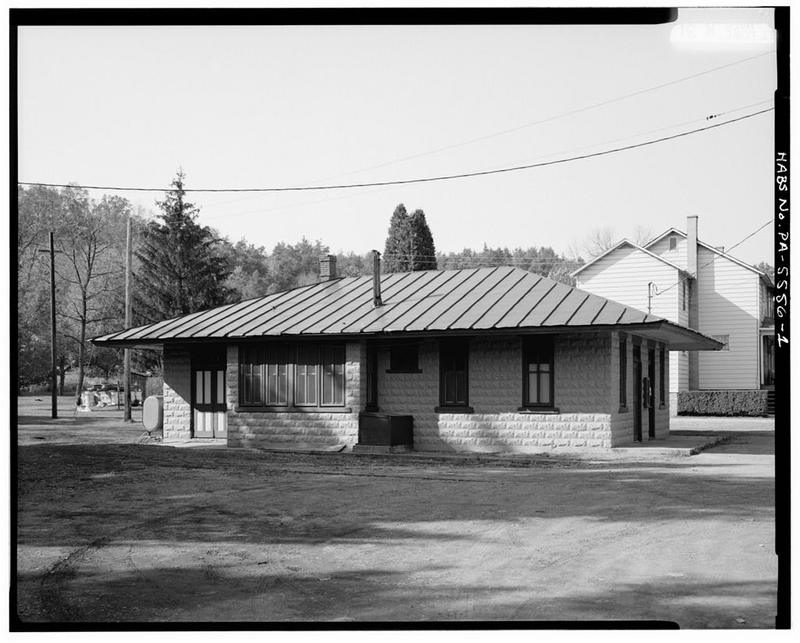
Robertsdale East Broad Top Railroad Depot, Main Street, Robertsdale
Robertsdale East Broad Top Railroad Depot, Main Street, RobertsdaleLibrary of Congress, Historic American Buildings Survey / Historic American Engineering Record. No known copyright restrictions. pa2067

Across the street from where Robertsdale's first railroad depot stood, on the north side of the East Broad Top tracks, is a one-story station of concrete block that the Historic American Buildings Survey recorded in 1989. The survey's account is short. Historic photographs show the original depot as a small wood building with board-and-batten siding, standing on the east side of Main Street between the company store and the tracks; beyond that the survey found nothing about it. The present depot replaced it, the survey says, around the time the Rockhill Iron and Coal Company built its office and the post office, and the new station appears on the Interstate Commerce Commission's 1917 valuation map of the East Broad Top and on the 1926 map of the village. Neither depot shows up in the tax records, which the survey found odd.

A blueprint of 1917 in the railroad's archives proposed a concrete-block station for Woodvale as well. Whether that one was ever built the survey could not say; nothing on the maps or aerial photographs could be identified as it.

A 1991 inventory of the county's engineering and industrial sites, written by Nancy S. Shedd and published by the National Park Service, carries the story past the survey. It records that the building served as the EBT depot until the railroad was abandoned in 1956, then became a television repair shop and a gas station, and had stood empty since the middle of the 1980s. The same inventory counts the small depots at Saltillo and Robertsdale among the structures that survive along the unused portions of the line, which has been designated a National Historic Landmark.

Project historian Lola Bennett did the research and writing in the summer of 1989 under Alison K. Hoagland, and the large-format photographs in the published report were made by HAER photographer Jet Lowe.

According to historic photographs, the original Robertsdale railroad depot was a small, wood structure with board-and-batten siding that sat on the east side of Main Street between the company store and the railroad tracks. Nothing else is known about this early structure.Library of Congress, Historic American Buildings Survey / Historic American Engineering Record, Robertsdale East Broad Top Railroad Depot, written data pages, HABS PA-5556 data pages, report page 1 (PDF page 2) · character 869 of the scanned text
Checked against the record. Checked against the survey's written record before publication; 4 claims it did not support were removed or corrected.

Open this story on its own page →

Woodvale Post Office, 5-7 Main Street, Woodvale
Woodvale Post Office, 5-7 Main Street, WoodvaleLibrary of Congress, Historic American Buildings Survey / Historic American Engineering Record. No known copyright restrictions. pa2090

On the north side of Main Street in Woodvale stands a small hipped-roof, wood-frame building that the Historic American Buildings Survey recorded in 1989 as the town's post office. The survey's history runs to three sentences. In 1919, four years after a post office was built in Robertsdale, another went up at Woodvale, and county tax assessments listed the new structure as originally valued at $150. Seventy years later it was still in use as a post office.

Woodvale was a company town. The survey was part of a larger project to document the Rockhill Iron and Coal Company towns of Robertsdale and Woodvale, undertaken by the Historic American Buildings Survey and the Historic American Engineering Record at the request of America's Industrial Heritage Project. Lola Bennett, the project historian, did the research and writing in the summer of 1989 under Alison K. Hoagland, and her work was published in 1990 as The Company Towns of the Rockhill Iron and Coal Company.

The 1992 National Register nomination for the Woodvale Historic District adds the building's shape and its name. It describes the 1919 post office as one story, wood frame, two bays wide with a hip roof, and calls it the one institutional building left in Woodvale after the town's two schools were torn down, one in the 1970s and one in the 1980s, and the company store burned in 1937. The nomination also explains why the post office does not carry the town's name: it uses the name Wood so as not to be confused with the Woodvale in Cambria County.

The Library of Congress catalog carries a slip of its own. The catalog title for the survey places the post office in Cambria County, while the survey's own data sheet, on its first page, puts it in Huntingdon County.

In 1919, four years after the post office was built in Robertsdale, another was erected at Woodvale, County tax assessments indicate that this structure was originally valued at $150. The small, hipped-roof, wood-frame structure on the north side of Main Street is still used today as a post office.Library of Congress, Historic American Buildings Survey / Historic American Engineering Record, Woodvale Post Office, written data pages, HABS PA-5575 data pages, page 2 · character 840 of the scanned text
Checked against the record. Checked against the survey's written record before publication; 6 claims it did not support were removed or corrected.

Open this story on its own page →

From the newspaper the county was reading at the time, on Wood township. Wood is the youngest township in the county, erected from Carbon in March 1905, so no newspaper of the 1870s could mention it by name. What the papers do describe is the place: Robertsdale, the Rockhill Iron and Coal Company's town, which the federal industrial survey dates to 1874 and which lies in what is now Wood township. This account of it being built appeared in the Huntingdon Journal on 12 August 1874, at the end of a description of the new railroad up Trough Creek Valley. It is printed exactly as the page reads, including the spelling of the day and the errors the scanner made.

Leaving Cook's Mills we finally arrive at the terminus, Robertsdale. At this place the company have laid out a town and already some thirty or forty dwellings have been erected. Here also is the centre of the East Broad Top coal lands. The company are run ning four mines at this place night and day. The company, we learn, have run a prelimi nary line from Robertsdale to Broad Top City, with a view of extending their railroad to that place.Huntingdon Journal, 12 August 1874, p. 3 · character 0 of the scanned text

Sources

  1. Huntingdon Journal, 12 August 1874, p. 3, on the new railroad up Trough Creek Valley and its terminus at Robertsdale
  2. Nancy Shedd, Huntingdon County Historic Engineering and Industrial Sites Inventory (1991): "Rockhill Iron & Coal Company: Company town of Robertsdale, On SR 913, Wood Twp. Construction date: 1874." Cited to place Robertsdale in Wood township and to confirm the date; still in copyright, so not quoted at length here.

Open this story on its own page →

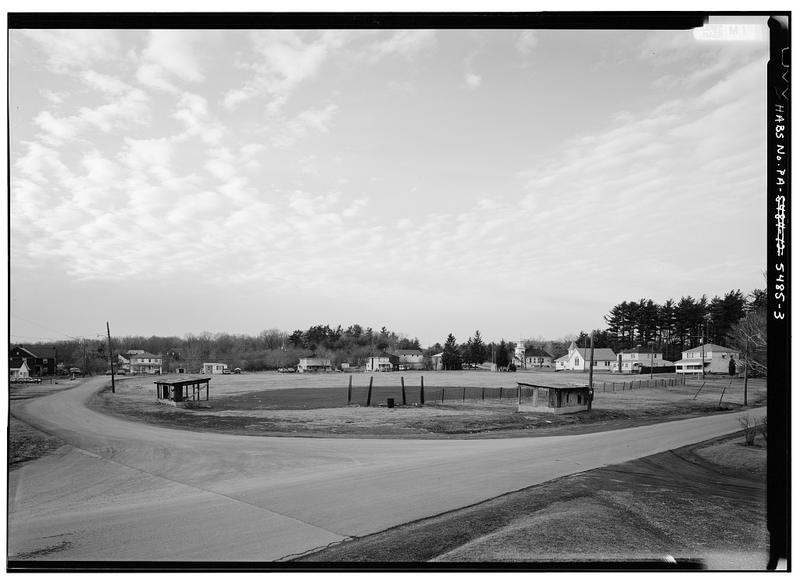
Town of Woodvale, Woodvale
Town of Woodvale, WoodvaleLibrary of Congress, Historic American Buildings Survey / Historic American Engineering Record. No known copyright restrictions. pa1984

Woodvale sits on the east side of Broad Top Mountain where Huntingdon, Fulton and Bedford counties meet. A large part of it lies in Wood Township, but the 1992 nomination notes that Fulton Street runs through all three counties. The post office uses the name Wood to avoid confusion with the Woodvale in Cambria County.

The town was built by the Rockhill Iron and Coal Company, formed by Philadelphia businessmen Edward and Algernon Roberts, Richard D. Wood, Ario Pardee and Gillingham Fell in partnership with Percival Dewees, a Rockhill furnace owner, and incorporated in 1872. The company bought control of the East Broad Top Railroad, completed the line from Mount Union to the mountain in 1874, and built Robertsdale at its first mine. By 1890 it had opened Rockhill No. 6, the Woodvale shaft, two miles south of Robertsdale, and that November finished the tracks to the mine. "With the opening of this mine came the necessity of housing more miners, thus the creation of the town of Woodvale, named after the Wood family who occupied several positions at various times with the East Broad Top and Rockhill Iron and Coal" (nomination, p17).

The nomination says the company was the most productive of all the Broad Top operations between 1873 and the 1920s, and Gardner's 1913 state report puts its output at some 1,300 tons a day, the largest in the field. The busiest years were 1915 to 1917, when wartime demand for coal opened mines 7, 8 and 9 near Woodvale. Summer excursion trains brought picnickers from all along the line to the Woodvale picnic grounds; the nomination, citing the Daily News, says the railroad hauled them in cattle cars because it could not buy more passenger cars.

The 1917 company store burned in 1937 and was not rebuilt. Immigrants from the Galician and Carpathian region built St. Michael's Greek Orthodox Church in 1917; in the 1920s the Klan burned crosses near the church.

Mine 6 closed in 1925 and the last mines in 1956. The company began selling houses to employees in 1948. When R. Ann Safley prepared the nomination she counted 79 contributing buildings on 96 acres, among them the 1911 Methodist church, the 1919 post office, a 1930s mule barn, and the 1913 power house, which held a shoe factory in 1958 and since 1978 a furniture factory employing around fifteen people.

With the opening of this mine came the necessity of housing more miners, thus the creation of the town of Woodvale, named after the Wood family who occupied several positions at various times with the East Broad Top and Rockhill Iron and Coal.National Register of Historic Places nomination, Woodvale Historic District (reference 92000942), p17 · character 22,904 of the scanned text
Checked against the record. Checked against the National Register nomination text before publication; 5 claims the nomination did not support were removed or corrected.

Sources

  1. National Register of Historic Places nomination: Woodvale Historic District, reference 92000942 (1992)
  2. James H. Gardner, The Broad Top Coal Field of Huntingdon, Bedford and Fulton Counties (Pennsylvania Geological Survey Report 10, 1913)

Open this story on its own page →

Front of the Robertsdale Hotel, located at 14 S. Main Street in Robertsdale, an unincorporated community in Wood Township, Huntingdon County, Pennsylvania, United States. Built in 1912, the hotel is part of the Robertsda
Front of the Robertsdale Hotel, located at 14 S. Main Street in Robertsdale, an unincorporated community in Wood Township, Huntingdon County, Pennsylvania, United States. Built in 1912, the hotel is part of the Robertsdale Historic District, a historic district that is listed on the National RegistePhotograph by Jet Lowe for the Historic American Engineering Record, 1989. A work of the United States Government; no known copyright restrictions. Robertsdale Hotel.jpg

The front of the Robertsdale Hotel at 14 South Main Street, in Robertsdale, an unincorporated community in Wood township. Built in 1912, and part of the Robertsdale Historic District, which is listed on the National Register of Historic Places. Photographed in the autumn of 1989 by Jet Lowe.

Checked against the record. The record names Robertsdale, Wood Township, Huntingdon County, gives the street address, dates the building to 1912 and names the historic district it belongs to.

Open this story on its own page →

Where it sits

Alexandria borough: 12 storiesBirmingham borough: 2 storiesBroad Top City borough: 2 storiesCassville borough: 2 storiesCoalmont borough: 2 storiesDudley borough: 2 storiesHuntingdon borough: 36 storiesMapleton borough: 6 storiesMarklesburg borough: 4 storiesMill Creek borough: 4 storiesMount Union borough: 137 storiesOrbisonia borough: 8 storiesPetersburg borough: 3 storiesRockhill borough: 5 storiesSaltillo borough: 5 storiesShade Gap borough: 3 storiesShirleysburg borough: 4 storiesThree Springs borough: 4 storiesBarree township: 6 storiesBrady township: 4 storiesCarbon township: 3 storiesCass township: 2 storiesClay township: 4 storiesCromwell township: 7 storiesDublin township: 5 storiesFranklin township: 10 storiesHenderson township: 6 storiesHopewell township: 5 storiesJackson township: 9 storiesJuniata township: 8 storiesLincoln township: 5 storiesLogan township: 5 storiesMiller township: 4 storiesMorris township: 2 storiesOneida township: 6 storiesPenn township: 4 storiesPorter township: 10 storiesShirley township: 10 storiesSmithfield township: 5 storiesSpringfield township: 5 storiesSpruce Creek township: 7 storiesTell township: 3 storiesTodd township: 5 storiesUnion township: 5 storiesWalker township: 9 storiesWarriors Mark township: 5 storiesWest township: 2 storiesWood township: 13 storiesHuntingdonMount UnionOrbisoniaThree SpringsPetersburgMapletonAlexandriaRockhillBroad Top CitySaltillo
10 or more4 to 91 to 3borough outline