Mount Union borough
The Pennsylvania Railroad Depot
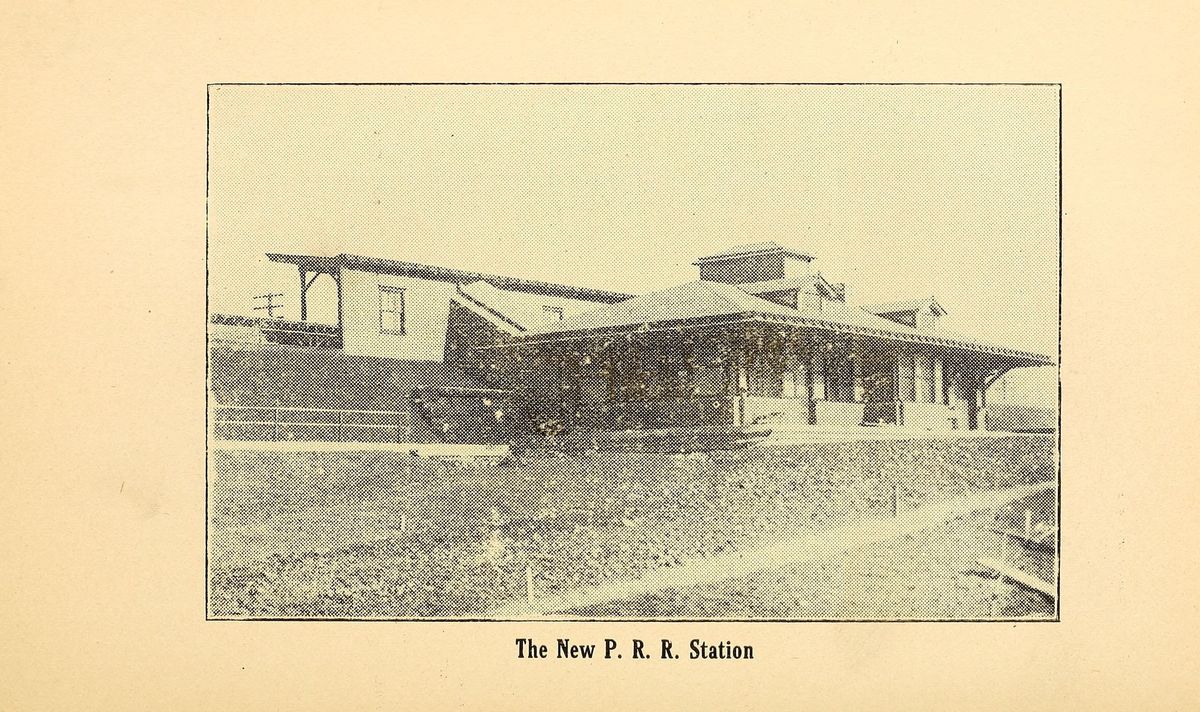
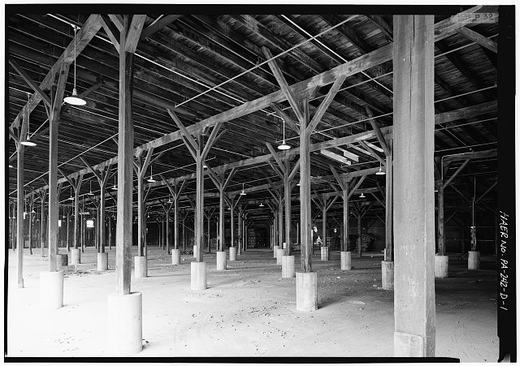
The PRR depot was Mount Union's front door, and by the time it was serving that purpose the main line had already stopped coming past it.
The National Register nomination for the town's historic district explains the arrangement. A high line viaduct, thrown over the bed of the old Pennsylvania canal in 1906 and 1907, let the Pennsylvania Railroad's main line bypass the town with its express trains. The original right of way, the one the station stood beside, became a yard siding where passengers and cargo were moved between the standard gauge and the narrow gauge East Broad Top coming up from the south. The upgraded main line runs just beyond the northern edge of the district.
It is often said the rails are why the brick companies came. The record puts the rock first. What drew them, say the National Register nominations, was the ganister on the mountaintops, combined with rail connections to Broad Top coal and to the steel centres that bought the brick. Rock and rails together, and the rock named first.
Charles H. Welch, writing in Mount Union in 1909, tells it the same way: before the Harbison-Walker plant went up, Scott Dibert and W. H. Haws of Johnstown came to look the town over as a site for a brick plant, and what they found was ganister on Jacks Mountain.
From the record
Passages about this subject, quoted from county histories now in the public domain. Each one names the book and the position in the text so it can be checked. Spelling is as printed.
He erected the large brick house on the southeast corner of Allegheny and Third Streets, in Huntingdon, long known as the Pennsylvania Railroad depot, prior to its removal a square farther westward. He occupied that large and commodious house with his family down to the time of his death. Nothing definite is known of the history of Mr. ‘Henderson prior to his advent into Huntingdon. As stated elsewhere, he came from Chester County. It is probable that he had some experience in the offices connected with the courts previous to his appointment in this county, which was probably the reason why he was selected for the various offices which he filled. In the southeast corner of the cemetery on the hill in Huntingdon is an inclosure surrounded by a massive brick wall, in which rest side by side the mortal remains of Andrew Henderson, who died on the 26th day of June, 1812, in the fifty-first year of his age, and of Mary Henderson, his wife, who died on the 21st of March, 1823, in the fifty-fourth year of her age; and also of John A. Henderson, their only son, who died on the 15th of September, 1824, in the thirty-second year of his age. Mr. Henderson, like many of the first settlers of Huntingdon, was an Episcopalian.!J. Simpson Africa, History of Huntingdon and Blair Counties, Pennsylvania (Philadelphia: Louis H. Everts, 1883) · character 465,453 of the scanned text
It is the passenger terminus of the Huntingdon and Broad Top Railroad. two hundred and three. Its public school was sustained during six months in the year 1881, and the whole number of pupils was forty-five. Churches in Dudley., Up to 1855 no church organization existed in the vicinity of Dudley. In that year John Palmer came here and first opened a Sunday-school in a school-house at Crawford. From this house religious services were excluded by the school directors, and afterwards services were held in the railroad depot at Dudley. The efforts thus put forth bore fruit, and in 1866 Mr. Palmer and John Whitehead resolved to inaugurate measures for the erection ofa church. To aid in this undertaking the coal operators in this vicinity contributed coal, which the Huntingdon and Broad Top and the Pennsylvania Railroad Companies carried to Philadelphia free of charge. Of these operators Wood & Bacon contributed one hundred tons; Dr. George Mears, twenty tons; Reakert & Brothers, twenty tons; Newton Sheets & Co., twenty tons; Orbison, Dorris & Burroughs, twenty tons, and others whose names are not recalled, till the amount reached two hundred and fifty tons. In addition to these donations, L. T.J. Simpson Africa, History of Huntingdon and Blair Counties, Pennsylvania (Philadelphia: Louis H. Everts, 1883) · character 1,533,760 of the scanned text
Mill Creek Station is about five miles below Huntingdon, and the depot building is spacious and well arranged, while all the surroundings ‘are neatly kept since the spring of 1880, A. M. Menold has been the agent, and this position had been filled for more than ten years previously by A. P. Burnham. Telegraphic and telephonic privileges are supplied. The village of Mill Creek at present has a large school building, Methodist and Baptist Churches, three stores, a hotel, and a number of mechanic shops. One of the first stores in this locality was kept at Wilson's Mills, by David Snively, as early as 1828; and soon after Milliken & Thompson sold goods in part of the "Old Red House," moving from there to the centre of the present village of Mill Creek, occupying a building which they had erected for business purposes on the lot where now is the store of Foust & Son. They occupied the room before the canal was finished, and had at once a good trade. Subsequently the McGees sold goods, and in 1840, J. & J. Milliken. In 1845 the merchants were Millikens & Kessler, and later Leonard G. Kessler alone. Subsequently the firm became Kessler & Brother. In 1856, George Eby was Kessler & Brother's successor, and nine years later was succeeded by Adam Hershberger.J. Simpson Africa, History of Huntingdon and Blair Counties, Pennsylvania (Philadelphia: Louis H. Everts, 1883) · character 1,467,145 of the scanned text
Sources
- Harbison-Walker Refractories Company, National Register registration form (ref. 90000392): ganister rock drew the brick companies to Mount Union, PHMC Bureau for Historic Preservation, via the U.S. National Archives (1990)
- History of Mount Union, Shirleysburg and Shirley Township, page 381: Scott Dibert and W. H. Haws of Johnstown investigating the town and finding ganister on Jacks Mountain, Charles Howard Welch, Mount Union, Pa. (1909)
- Mount Union Historic District, National Register of Historic Places registration form (reference 94000516), section 7: the 1906-07 high line viaduct and the old right-of-way becoming an East Broad Top transfer siding, National Park Service (1994)
Checked 2026-09-10 · Historic Mount Union collection
← All stories from Mount Union borough
Have something to add to this story, or a photograph of it? Send it here →
Photographs from Mount Union borough

More from Mount Union borough
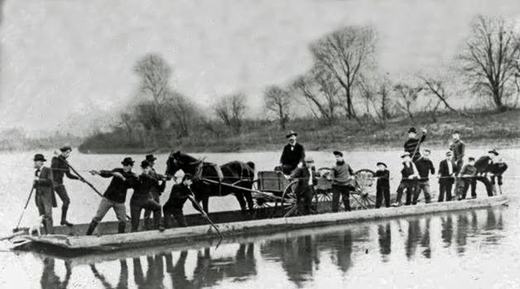
Did you know? The crossing at Drake's Ferry, just above Mount Union, went from a ferry to a series of bridges. Samuel…
Mount Union borough, The darkest day: February 27, 1917February 27, 1917, eight minutes past midnight. The eastbound Mercantile Express, Pennsylvania Railroad train No. 6 out…
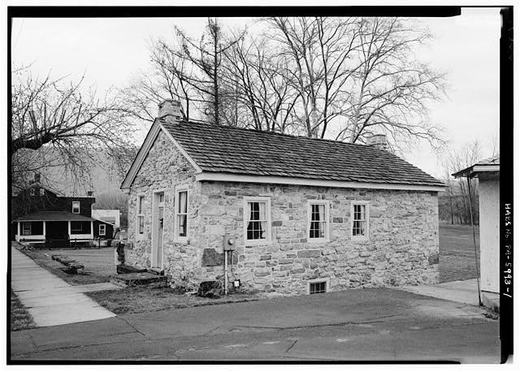
Mount Union borough, A Question We Cannot Settle, and Maybe You CanThis stone house stands on West Water Street near Division. The federal survey records it as the John Sharrar House and…