Huntingdon borough
Huntingdon Iced The Eastbound Trains
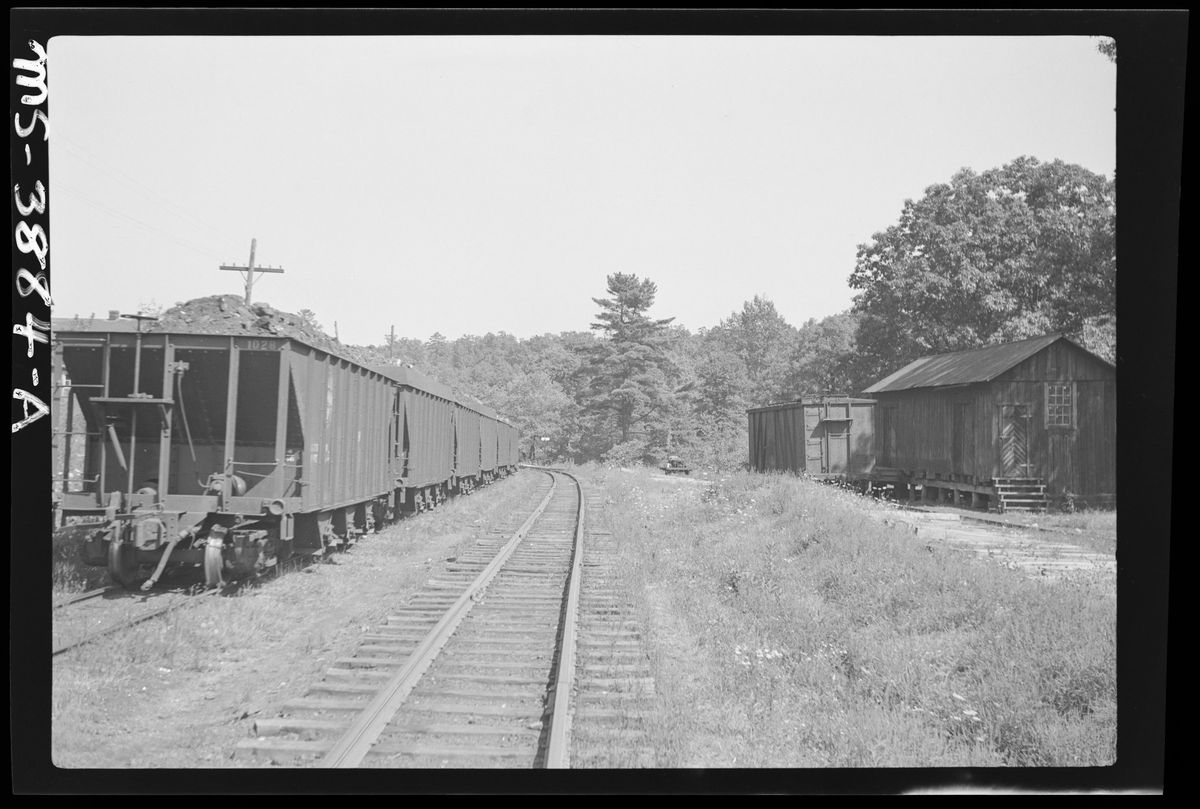
West of Fifteenth and Penn streets in Huntingdon, beside the railroad, the Boyle Ice Company of Chicago built a plant in 1925 to ice refrigerated rail cars. It serviced every eastbound train on the Pennsylvania Railroad, because Huntingdon was the last icing station before the eastern markets.
Three deep wells fed the freezing room, where an ammonia and brine process made ice in 400-pound blocks. Overhead cranes plunged the cans in water to free the blocks and carried them to storage at 28 degrees. A chain conveyor ran the ice through a tunnel under one track and up a steep incline to an elevated steel platform over the siding.
Depending on the weather and the cargo, a refrigerated car needed ice about every twelve hours. Fruit and vegetables rode on block ice, and meat cars took crushed ice and salt to stay colder. The plant iced fifteen cars in a "pull," three minutes to a car, and a crew might finish a fifty or sixty car train in an hour. John States, who worked there forty-three years, recalled icing 125-car trains carrying nothing but California grapes bound for New York City.
The plant ran twenty-four hours a day with eight to ten men a shift, and the men unloaded 50-ton salt cars with scoop shovels. In the Depression they worked twelve-hour shifts and were paid for nine.
Business slacked off as automatic refrigeration and trucks competed for it. To cut expenses the men gave up all benefits and vacations and stayed on call around the clock, coming in whenever Altoona sent word that a train was on its way. A 1991 National Park Service inventory of the county's industrial sites says that irregular schedule made it easier for them to cope when the plant closed for good in 1972. When that survey was made, the building stood abandoned and deteriorating.
Checked 2026-10-31 · County histories and primary sources, read in full
← All stories from Huntingdon borough
Have something to add to this story, or a photograph of it? Send it here →
Photographs from Huntingdon borough
More from Huntingdon borough
Long before the Army engineers built their high-level dam on the Raystown Branch, a company led by Huntingdon men put…
Huntingdon borough, The Museum Director Who Found Art at JuniataDid you know? The man who ran the Museum of Fine Arts, Houston for 28 years found art in a freshman class at Juniata…
Wood township, Two Explosions Of 1906In 1906 news went out of two explosions in Huntingdon County, and both times a flame was blamed or suspected. A…
Also about County history
By the end of March 1905, the sickness Mount Union's local physicians had been calling chicken pox had a new name. Dr.…
elsewhere in the county, Penn State Built A Lake In Stone ValleyIn December 1956, Penn State president Eric A. Walker announced a plan for a man-made lake on the university's land in…