Mount Union borough
Harbison-Walker Refractories Company
The plant that started Mount Union's refractory brick industry stood at the west end of West Shirley Street, on a flat expanse at the foot of Jacks Mountain. The W.H. Haws Company, refractory makers from Johnstown, began building it in 1898 and 1899 and sold the whole property to Harbison and Walker of Pittsburgh. The nomination says this was the first works in the United States built exclusively to make refractory brick.
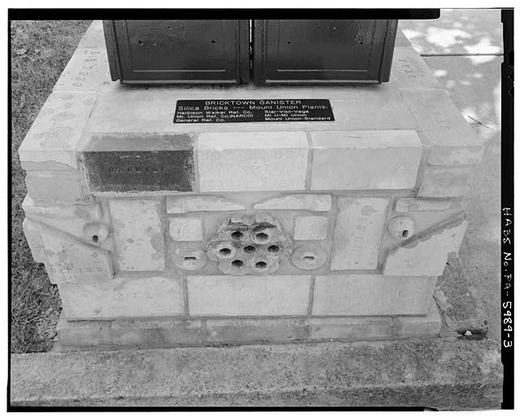
Charles Howard Welch's 1909 history of Mount Union tells how it began. Scott Dibert came to town with W.H. Haws of Johnstown to look it over as a site for a brick plant, and they found large quantities of ganister rock on Jacks Mountain. Ganister is the stone silica brick is made from, and the nomination says the deposits around Mount Union are what drew the brick companies. Two more refractory companies followed, and their combined production led to what the nomination calls the town's claim to be the refractory brick capital of the world.
Within five years of the first works a second was built beside it, and the two were designed to run independently. By 1910, the nomination says, the dual plant could produce 150,000 bricks a day. Two railroads served it, the East Broad Top bringing in coal and the Pennsylvania carrying the brick out. The ganister came at first from exposed rock on the north side of Jack's Narrows, hauled across the Juniata River and the PRR main line on a dinky tramway; later the quarrying moved to the mountainside directly above the plant.
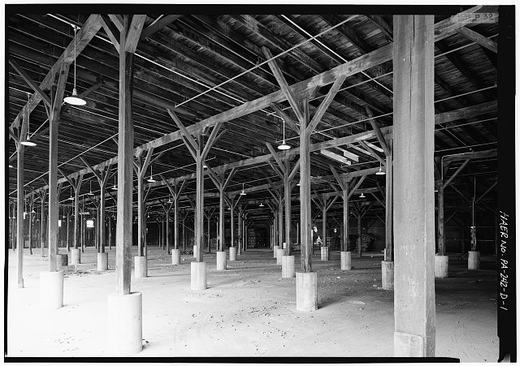
The plant made refractory products from 1899 through 1985, which the nomination says made it the longest producing refractory complex in the county. The kilns still standing in 1989, 44 feet across and bound with metal bands, had burned coal at first and were converted to gas and to oil in the 1950s and 1970s, changes the nomination reads in the colored piping on their outside walls. The nomination reached the National Park Service in February 1990 under Criterion A for industry, with the crushers, silos and conveyors added after 1950 counted as noncontributing. The nomination says most of the machinery had been removed by then, but inside both works the tracks that carried raw material and unfinished brick through the process were still in place.
Both the Pennsylvania and East Broad Top railroads served the plant. The EBT provided coal to fire the kilns and the steam boilers which powered the crushing pans, and the PRR offered direct shipping to the customers who purchased the brick.National Register of Historic Places nomination, Harbison-Walker Refractories Company (reference 90000392), section 8, p. 14 · character 21,142 of the scanned text
Sources
Checked 2026-09-05 · National Register of Historic Places nomination, read in full
← All stories from Mount Union borough
Have something to add to this story, or a photograph of it? Send it here →
Photographs from Mount Union borough
More from Mount Union borough
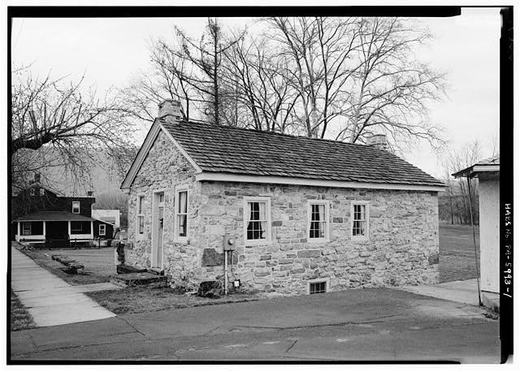
This stone house stands on West Water Street near Division. The federal survey records it as the John Sharrar House and…
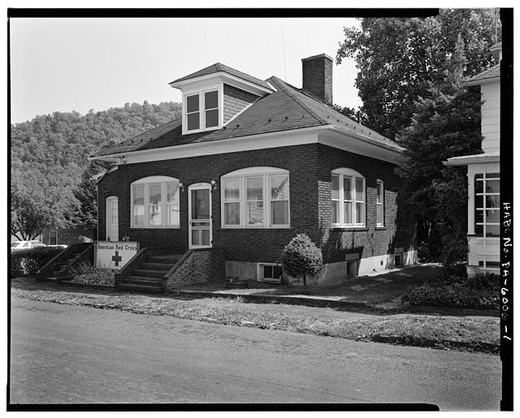
Mount Union borough, The Brick Office that Became the Red CrossLook at the sign in the yard. This little brick building on Market Street was the General Refractories Company office.…
Mount Union borough, Aetna Explosion 1916Did you know? The building that killed six men at Mount Union had been catching fire all summer, and the paper reported…
Also about industry
The Rockhill Iron and Coal Company store stands at the corner of Main and Cliff streets in Robertsdale, opposite the…
elsewhere in the county, The company office that became the post officeThe Rockhill Iron and Coal Company office stands on the east side of Main Street in Robertsdale, just south of the East…