Alexandria borough
Alexandria, the canal town the survey wanted on the National Register
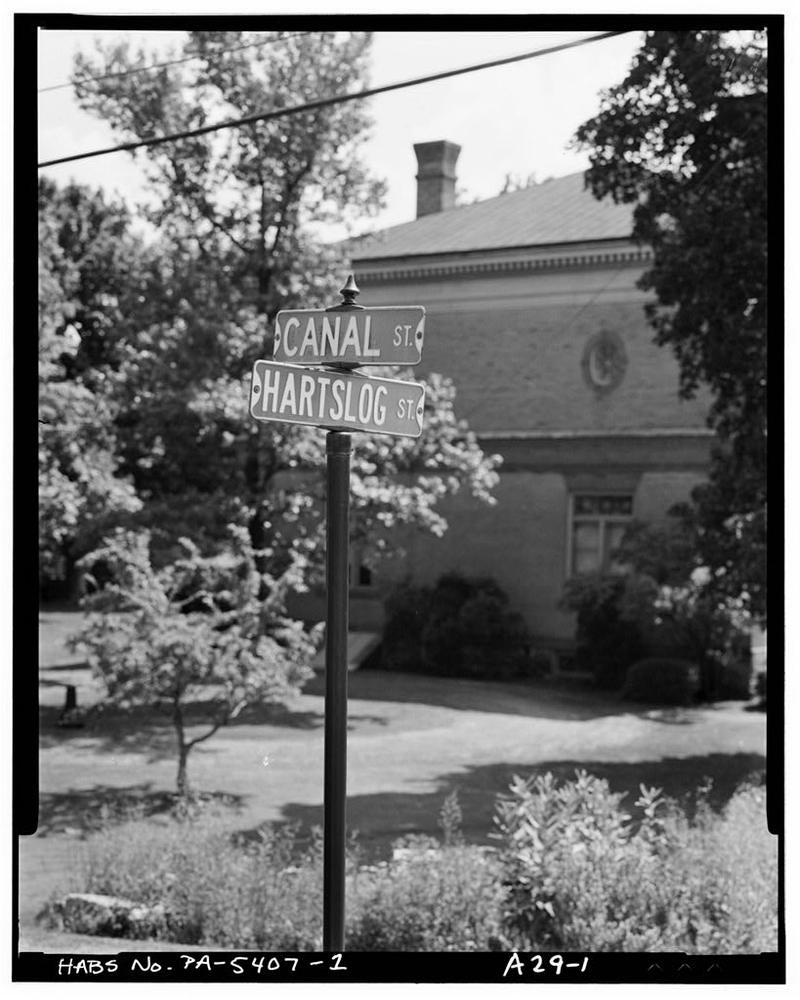
The Historic American Buildings Survey's overview of Alexandria, HABS PA-5407, is the town-wide report of the 1988 canal-towns project; the individual building records from that summer, from the John Porter House to the lockkeeper's house, list it alongside their own. The project information names Alison K. Hoagland as project leader, Karen Genskow as project historian and Sara Amy Leach as editor of the final report, which became Chapter 3 of Two Historic Pennsylvania Canal Towns: Alexandria and Saltsburg, published by the National Park Service in March 1989.
The report traces the town to the Hartslog tract, in what is now Porter Township, named for the trader John Hart and the fallen white oak log where, the survey says, legend has him salting his horses. In August 1793 Elizabeth Gemmill, a widow, had the town laid out on a grid of 100 lots, 60 by 200 feet except for the shorter ones along the river, with a diamond one block from Main Street. Lytle's 1876 county history records that the proprietress acknowledged the plan on August 7, 1798, and had it recorded the same day; Africa's 1883 history says it was attested for her that day by David Stewart. Lytle gives the borough's incorporation as April 11, 1827. Africa adds that the lots carried a ground rent from September 1, 1793; the survey says Gemmill's heirs went on collecting it until about 1920.
The canal made the town. The survey says the plans for it set off a building boom in Alexandria by 1825, with brick taking over from log and stone. The Juniata Division was legislated in 1827, regular shipping began in the spring of 1833, and locks No. 49 and No. 50 sat just west and east of Hartslog Street. The survey credits the years 1830 to 1850 with the town's most elaborate buildings, and two brick Greek Revival churches, German Reformed and Presbyterian, were finished in 1851.
The Pennsylvania Railroad bought the main line east of Hollidaysburg in 1866 and the canal through Alexandria closed in 1875; a small station followed in 1897 and full shipping in 1900. The survey found a historic core without modern intrusive buildings and recommended it for the National Register of Historic Places as a district. It also priced the original lots in English pounds: seven for a lot on the diamond, three for one on Third Street.
Altogether, this division required eighty-eight locks to overcome a rise of 582 feet. Locks No. 49 and No. 50 were constructed in Alexandria just west and east of Hartslog StreetLibrary of Congress, Historic American Buildings Survey / Historic American Engineering Record, Alexandria, written data pages, HABS PA-5407 data pages, p. 10 (Canal Era) · character 24,771 of the scanned text
Sources
- Library of Congress, Historic American Buildings Survey PA-5407: Alexandria, Town of, Alexandria (1988)
- HABS PA-5407 written historical and descriptive data (22 pages) (1988)
- Milton Scott Lytle, History of Huntingdon County, in the State of Pennsylvania (1876)
- J. Simpson Africa, History of Huntingdon and Blair Counties, Pennsylvania (Philadelphia: Louis H. Everts, 1883)
Checked 2026-09-05 · Library of Congress survey record, read in full
← All stories from Alexandria borough
Have something to add to this story, or a photograph of it? Send it here →
Photographs from Alexandria borough
More from Alexandria borough
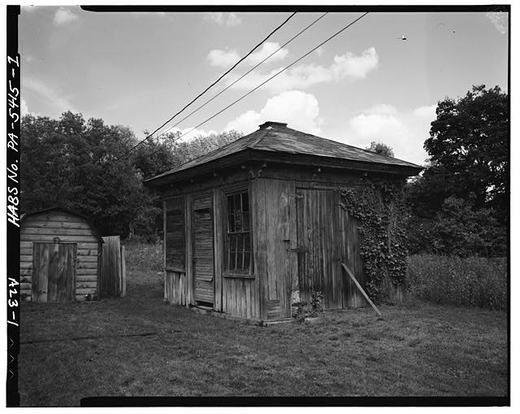
A square frame depot stood on the north side of Shelton Avenue, between Hartslog Street and the old canal basin, when…
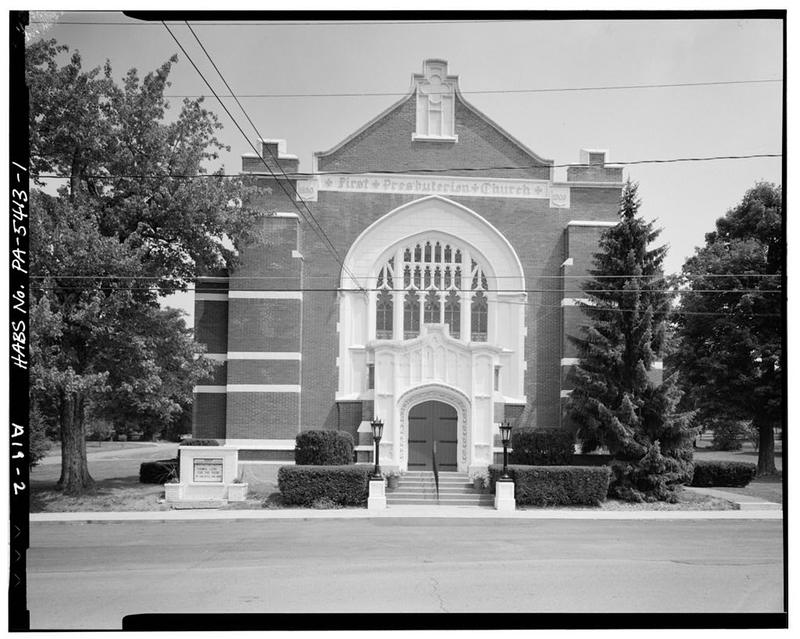
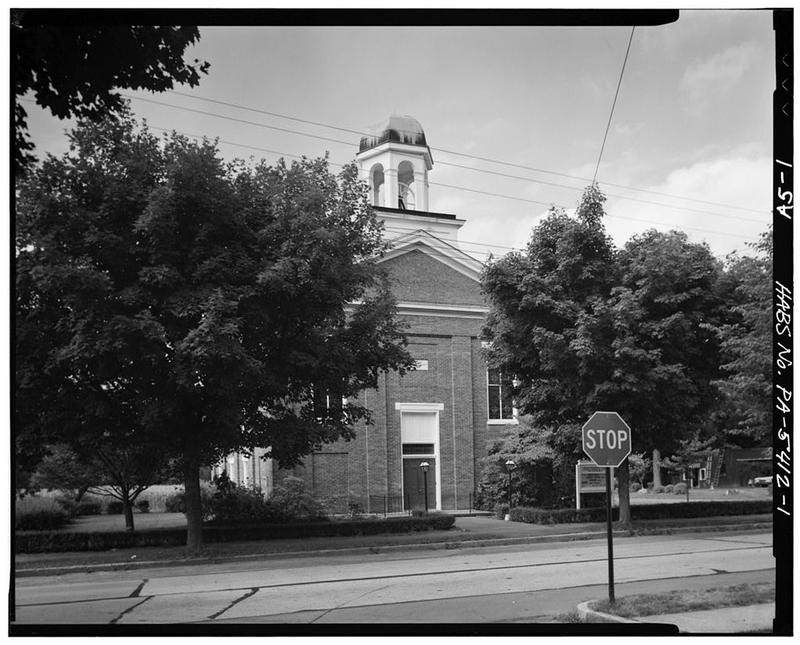
Alexandria borough, Alexandria Presbyterian Church, built 1851 and refaced in 1906The Alexandria Presbyterian Church stands on the northeast corner of Hartslog Street and Shelton Avenue, and its…
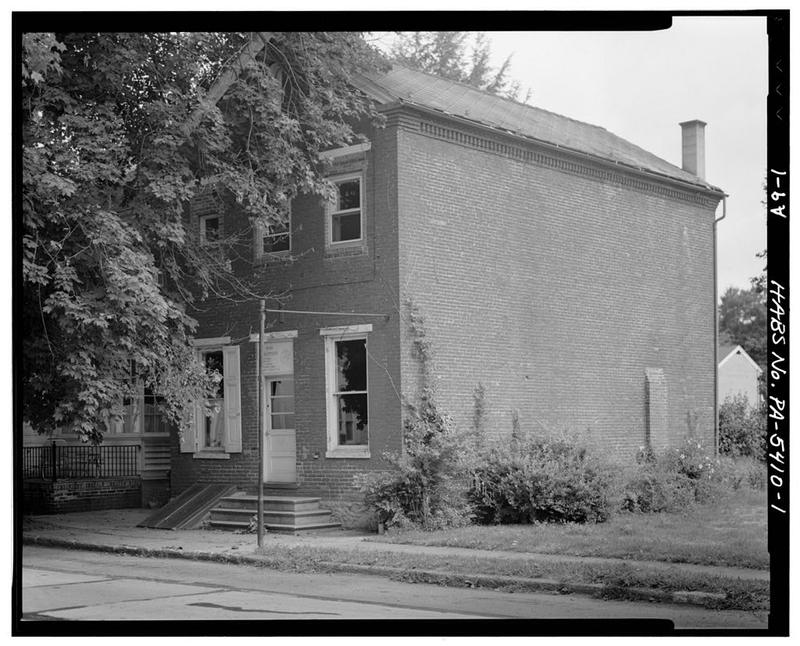
Alexandria borough, The Evander P. Walker store on Main StreetOn the north side of Main Street in Alexandria, five lots north of Hartslog Street, stands a two-story brick store with…
Also about canal