Birmingham borough, Warriors Mark township
A City that Wasn't
Did you know? A Huntingdon County town was once sold off by lottery, and the lottery is a big part of why it never became the city it was drawn up to be.
On December 13, 1797, John Cadwallader laid out Birmingham on the north bank of the Little Juniata, about three miles below where Tyrone sits now. The county history says it was laid out "for a manufacturing town, at the head of navigation." Three hundred acres. Streets from sixty six to two hundred feet wide. Two lots set aside for a school house and a library hall, and four lots promised to any established religious society that wanted to build a church and a burial ground.
Then came the part that sank it. The lots were sold by ticket. Ten dollars for a town lot, five dollars down. Which lot you actually got was drawn by ballot, overseen by five freeholders who had to swear or affirm to act impartially before they could start. People in eastern cities bought in without ever standing on the ground.
The history is blunt about what the plan hid. It was "made to look very attractive to a people who knew nothing of the steep hills and ravines included within the limits of the plat." When buyers came to see what they had drawn, a good many found their lot "perched upon a steep hillside or in the bottom of a deep hollow," and they walked away from money they had already paid.
The great city never came. The village is still there.
From the record
Passages about this subject, quoted from county histories now in the public domain. Each one names the book and the position in the text so it can be checked. Spelling is as printed.
Birmingham, a borough situated in the southwestern end of Warriorsmark township, and on the north bank of the Little Juniata river, which flows between it and the Pennsylvania railroad, w*as laid out in December, 1797, by John Cadwallader, by whom it was designated on the plot as"laid out for a manufacturing town at the head of navigation." The original plan of the town was recorded February, 26th, 1799, and the supplemental plan, August 16th, 1833. It was incorporated as a borough April 14th, 1838. Including about three hundred acres of extremely undulating land, it presents, notwithstanding the lofty hills and deep ravines, an attractive appearance on paper. The principal feature which commended it as a site for a town was the numerous springs of calcareous and free stone water gushing from every hill-side, and affording, with the fall in the Juniata, abundant and superior water power, the value and importance of which had not only attracted attention at an earlier day, but had been utilized in 1786 by the erection of a grist mill and saw mill on the river, and in 1795 by a paper mill on Laurel run. At the latter was manufactured the paper upon which the Huntingdon Gazette was printed in 1801, if not the Courier in 1797. Mr.Milton Scott Lytle, History of Huntingdon County (Lancaster: William H. Roy, 1876) · character 574,585 of the scanned text
Birmingham, situated on the Little Juniata river and the main line of the Pennsylvania railroad, seven miles west of Huntingdon, was laid out in December, 1797, by John Cadwallader, "for a manufacturing town at the head of navigation." The proprietor was generous in his ideas of building up a town, donating lots for educational and religious purposes, a "library hall," etc. On the plat, near the bank of the Juniata, was marked "the Public Landing," which was also designated as the "head of navigation." In order to stimulate the sale of lots Mr. Cadwallader sold tickets at fifteen dollars, to draw a lot of two acres suitable for manufacturing purposes, or ten dollars for a regular town lot. These sums represented one-half the price of the lots, the other half to be paid after the drawing and the execution of the deed. The first store was started in Birmingham in 1811 by Dr. Burt, who was also the first physician. Thomas Stewart was the first postmaster. Birmingham was incorporated as a borough by act of the legislature on April 14, 1828, and the first election was ordered to be held at the house of Mary Jordan. The records of that election have been lost, so that the names of the first borough officers cannot be ascertained. The earliest records available are for 1831, when John Owens was the chief burgess.John W. Jordan, ed., History of the Juniata Valley and Its People (New York: Lewis Historical Publishing, 1913) · character 222,014 of the scanned text
There are also Presbyterian, Methodist, and United Brethren Churches, a school building, and two hundred and thirty-three inhabitants. The village was projected by John Cadwallader, who owned a large tract of land in these parts, "and Jaid out for a manufacturing town, at the head of navigation and on the north bank of said river (Little Juniata), Dec. 13, 1797." In the plan pre pared for the proprietor a public landing is shown on the river, near which is a coal-mine, while yet farther down the stream are indicated mills for merchant By a large 394 HISTORY OF HUNTINGDON COUNTY, PENNSYLVANIA. spring was a public square, and leading from it Market Street, having the munificent width of two hundred feet. The plan embraced three hundred acres of Jand, upon which were a number of springs of freestone water, and was made to look very attractive to a people who knew nothing of the steep hills and ravines included within the limits of the plat.J. Simpson Africa, History of Huntingdon and Blair Counties, Pennsylvania (Philadelphia: Louis H. Everts, 1883) · character 2,532,211 of the scanned text
Checked 2026-08-01 · County history, independently fact checked
← All stories from Birmingham borough
Have something to add to this story, or a photograph of it? Send it here →
Photographs from Birmingham borough
More from Birmingham borough
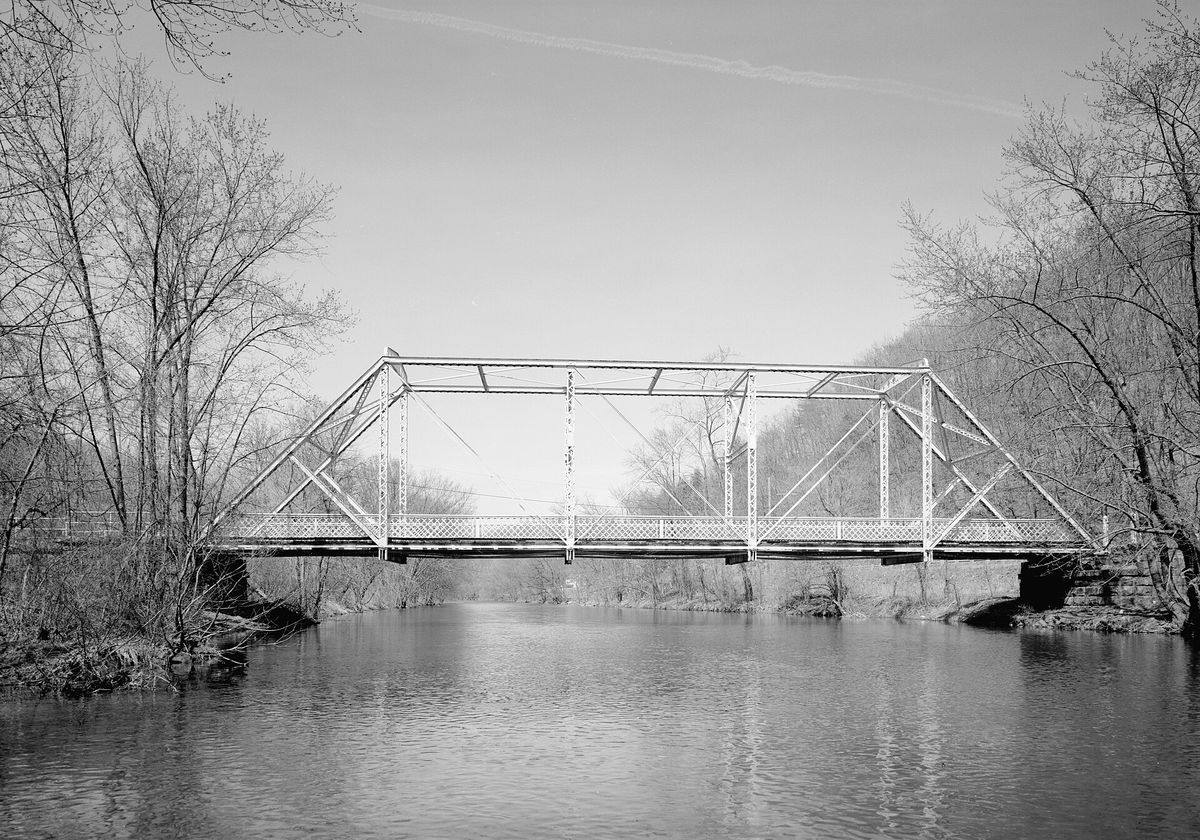
Where the Little Juniata River passes Birmingham, a steel truss bridge carries a plank deck across from Warriors Mark…
Warriors Mark township, The Warriors' MarksDid you know? Nobody is certain how Warriors Mark got its name, and the county history says so in plain words. The…
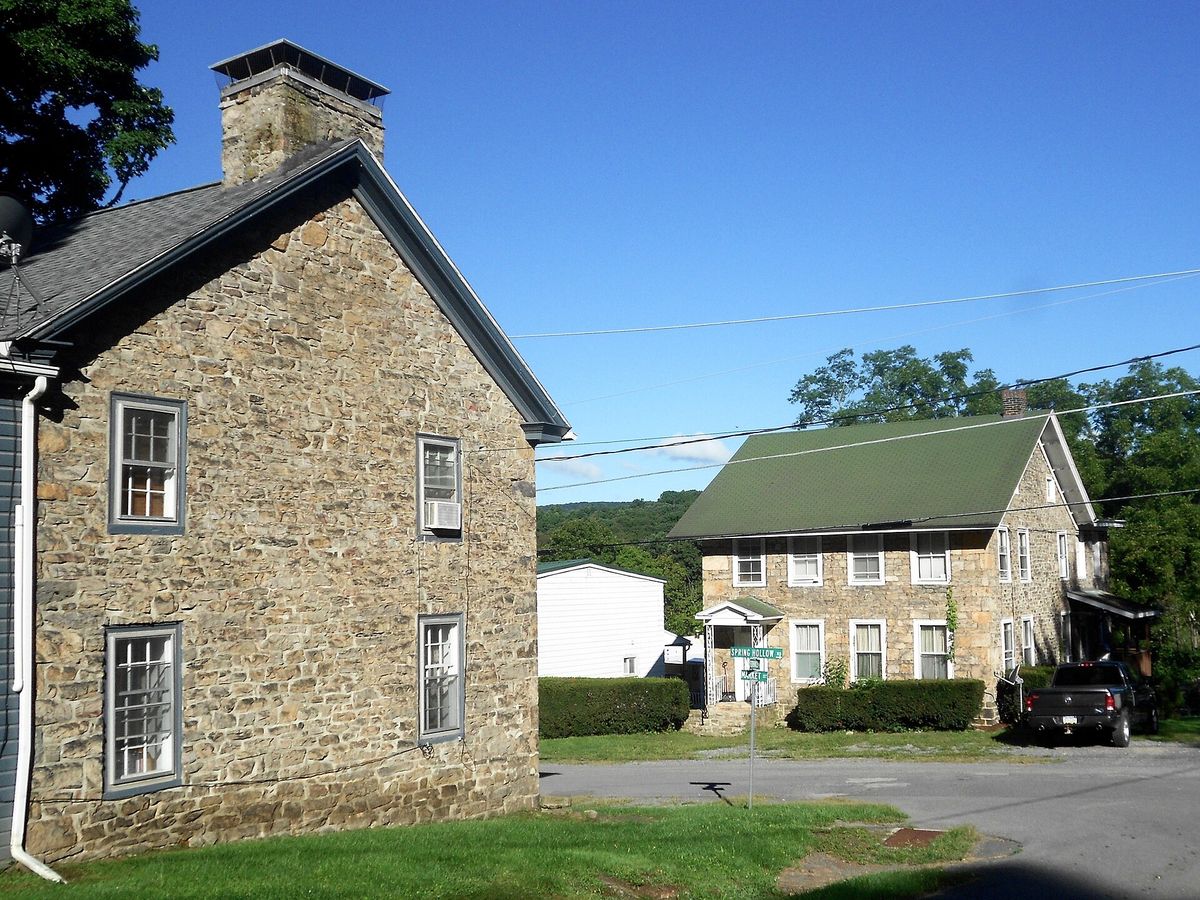
Birmingham borough, Two stone houses in BirminghamBirmingham is the smallest borough in Huntingdon County and one of the oldest, sitting on the Little Juniata where the…